Restoration of the Hall of State at the Austrian National Library
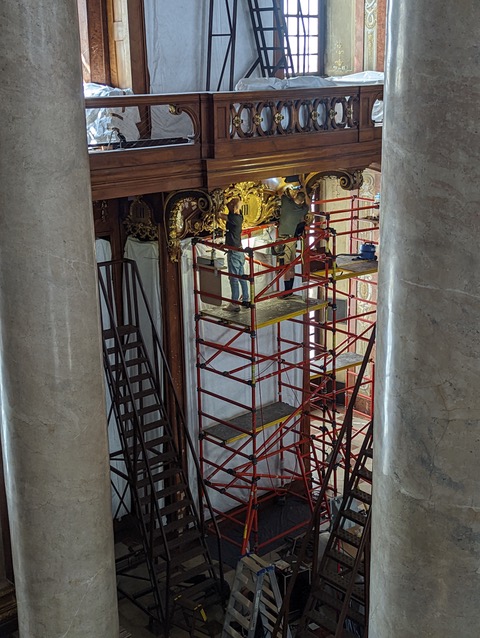
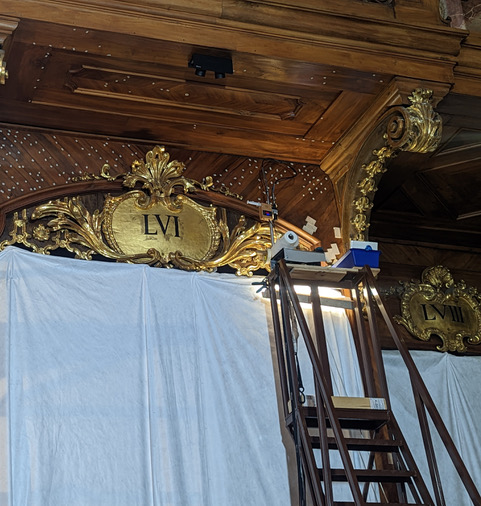
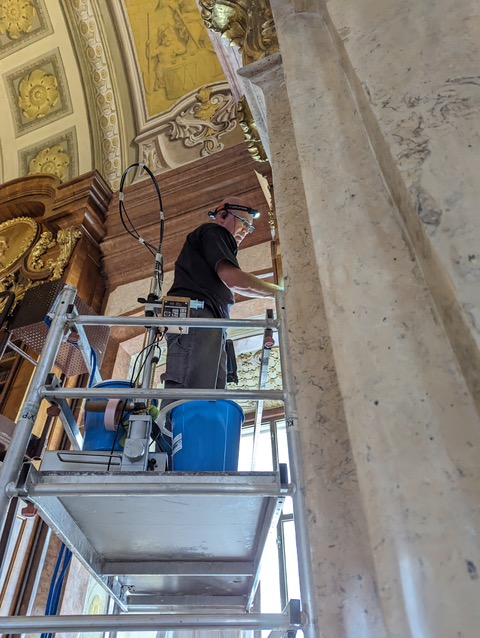
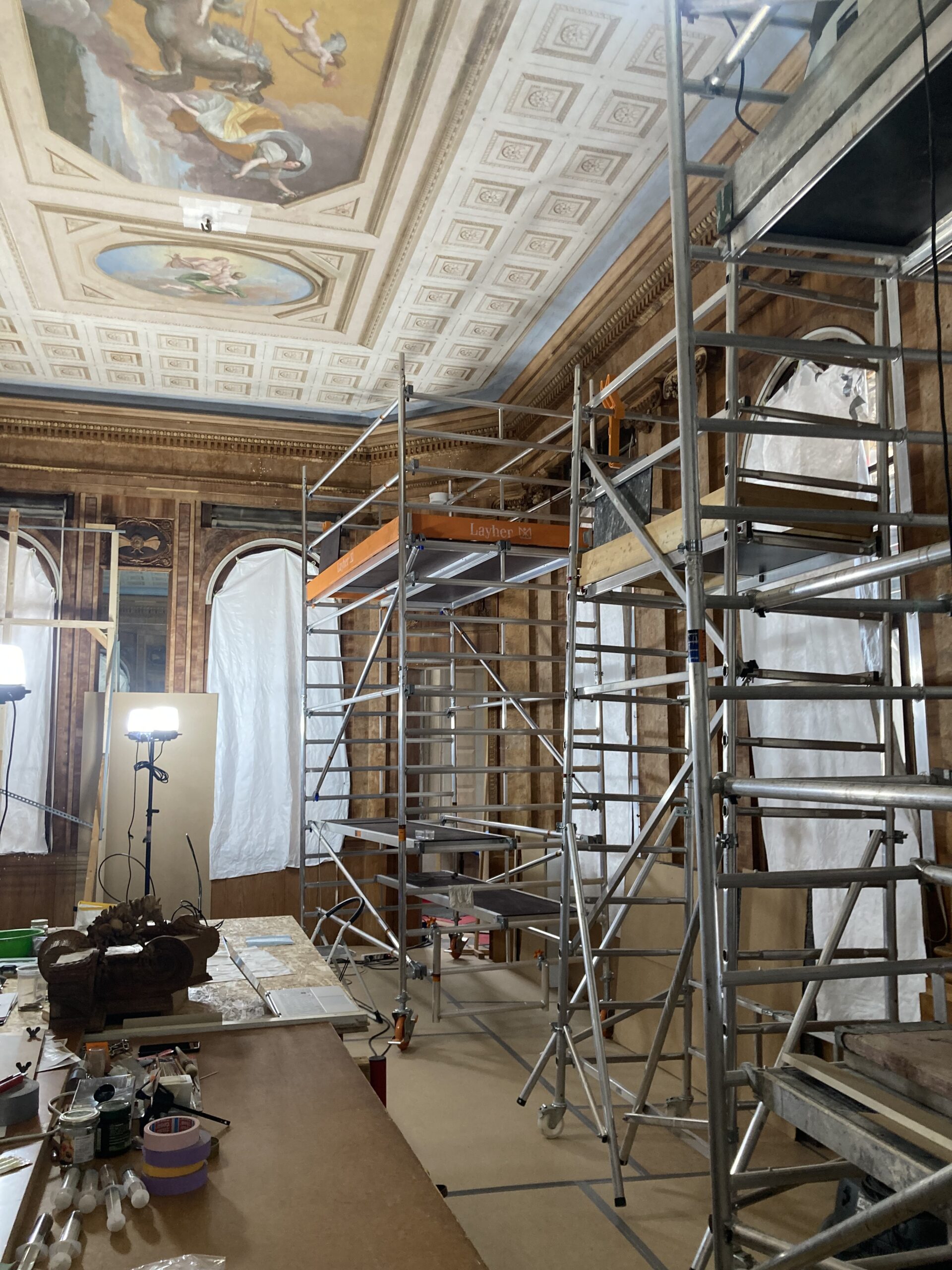
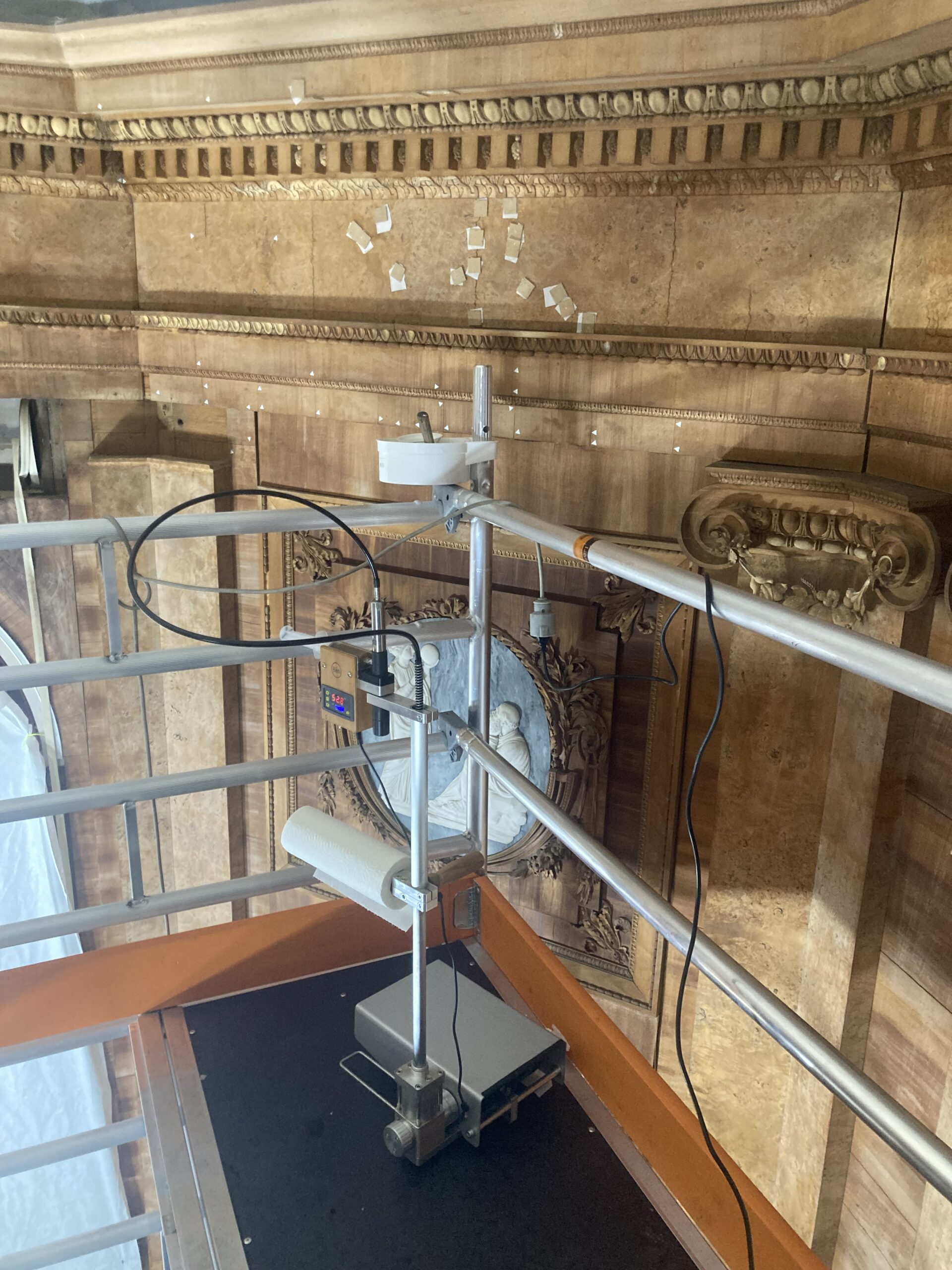
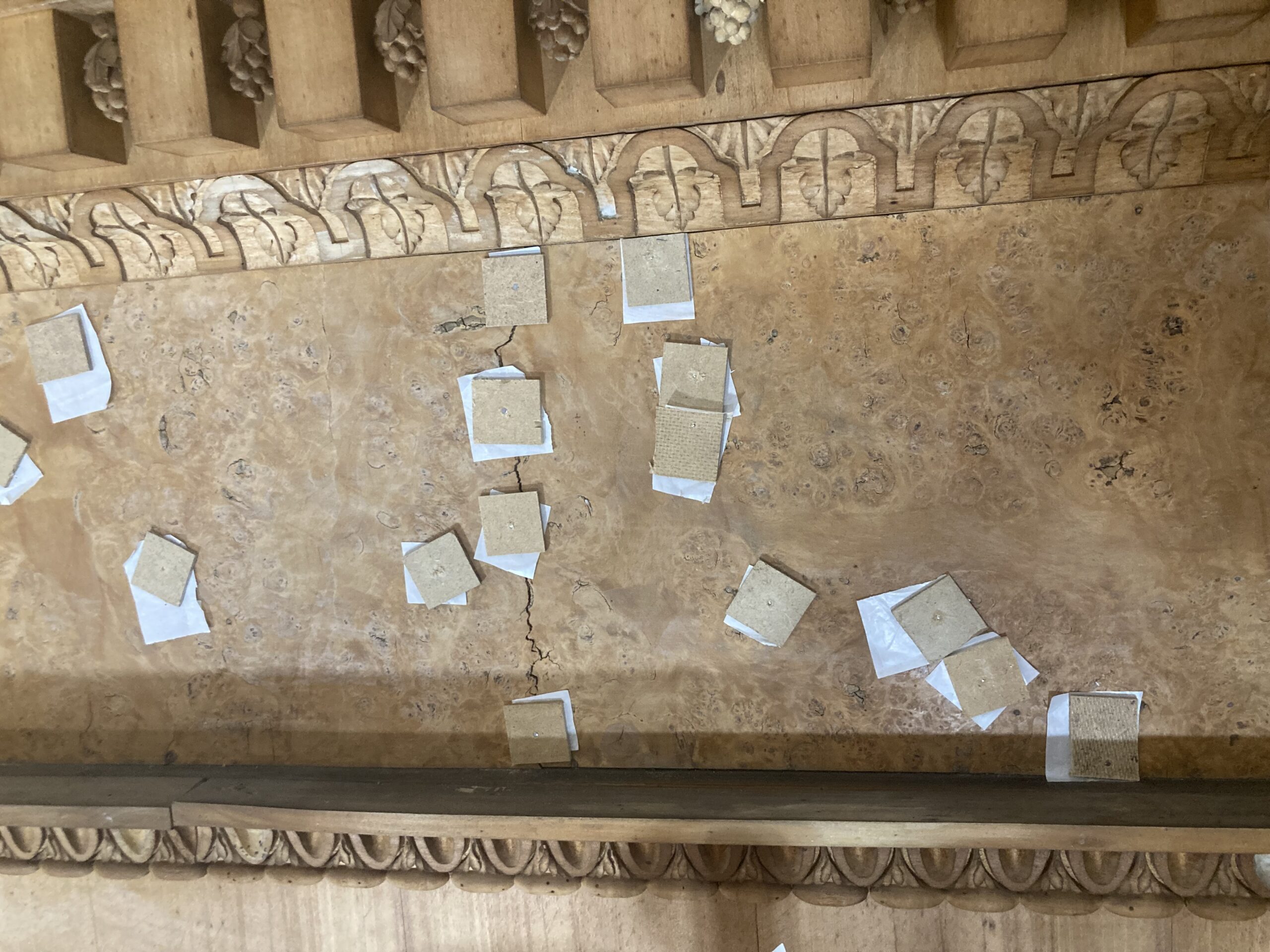
The largest project restored to date using Steno-injection is the Hall of State (Prunksaal) at the Austrian National Library in Wien. The baroque wall shelves feature elaborate walnut sawn veneer across all visible surfaces. Before restoration, approximately 50,000 detached areas extended across the hall's veneer surfaces. Veneer consolidation on this scale presented a true challenge for the firm Kopp Restauratoren GmbH. The conservators successfully managed this task within one year using four injection machines. A mixture of hide glue and bone glue was injected through a 0.5 mm cannula.
Image material: Peter Kopp, Kopp Restauratoren GmbH, Wien
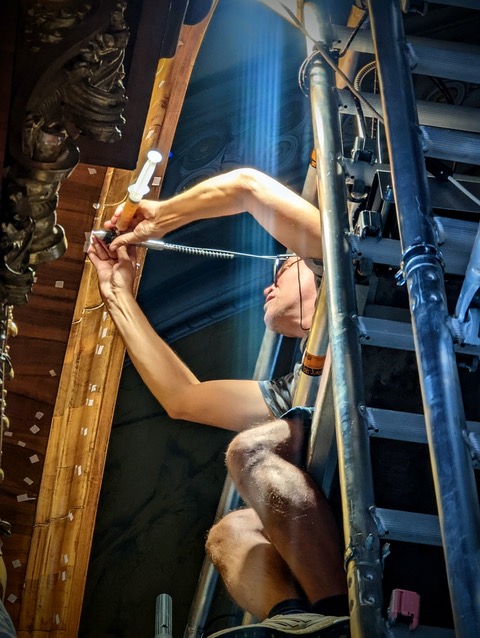
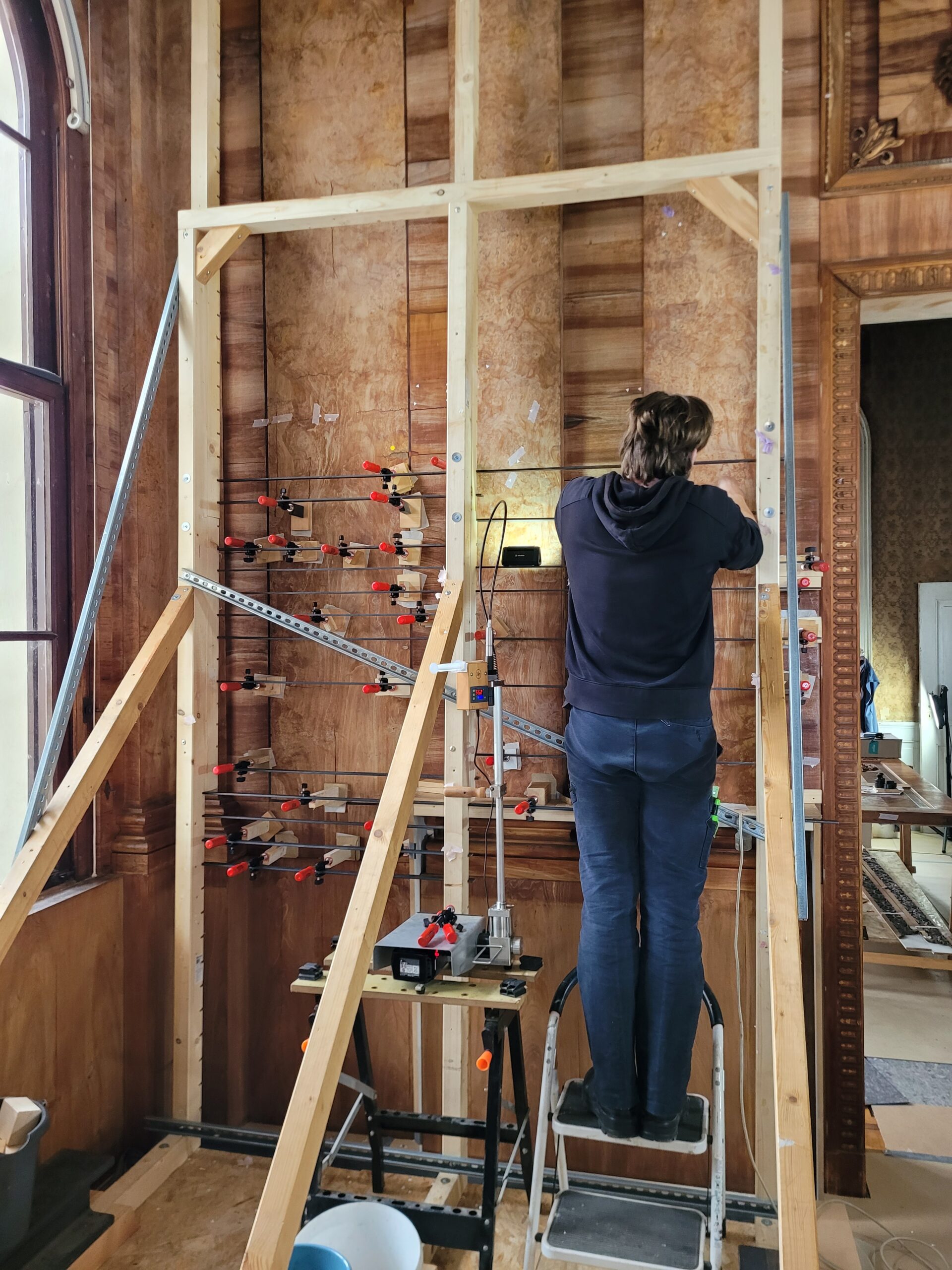
The work was carried out at a considerable height, as well as overhead.
Marking of injection points with adhesive labels.
Injection from the scaffolding.
Conservation of Floors and Wall Paneling in Pfaueninsel Castle, Berlin
The castle on Pfaueninsel in Berlin, owned by the SPSG, was undergoing comprehensive conservation. "Conservation" is a top priority on this construction site, particularly regarding measures applied to the interior furnishings. The marquetry floors and wall paneling exhibited numerous veneer detachments. In order to stabilize these with minimal loss of original substance, Steno-injection was firmly anchored in the tender specifications for the first time in history. This marked a significant milestone in wood conservation.
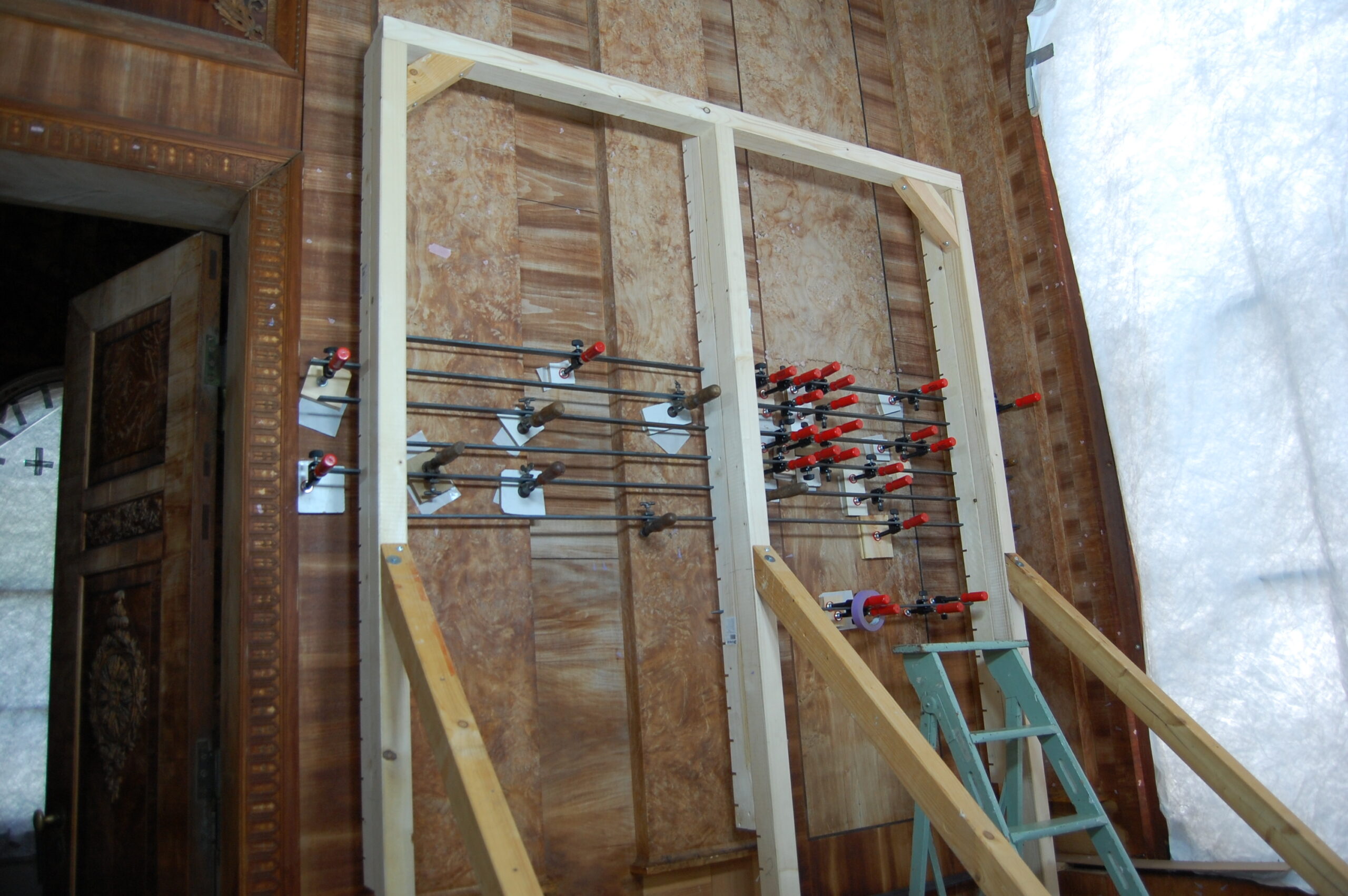
During the work on the wall paneling, the restoration studio Ralph Broschke from Potsdam consolidated around 5,000 detached areas. For pressing down the lower area of the paneling, a solid frame structure was built, enabling the use of screw jacks. On the cornice, the injection points were fixed using metal pins and small wooden plates. The metal pins were placed in the injection holes or into the joints.
Working situation in the ballroom
Injection work on the cornice. Most of the work was performed from the scaffolding
Fixation points
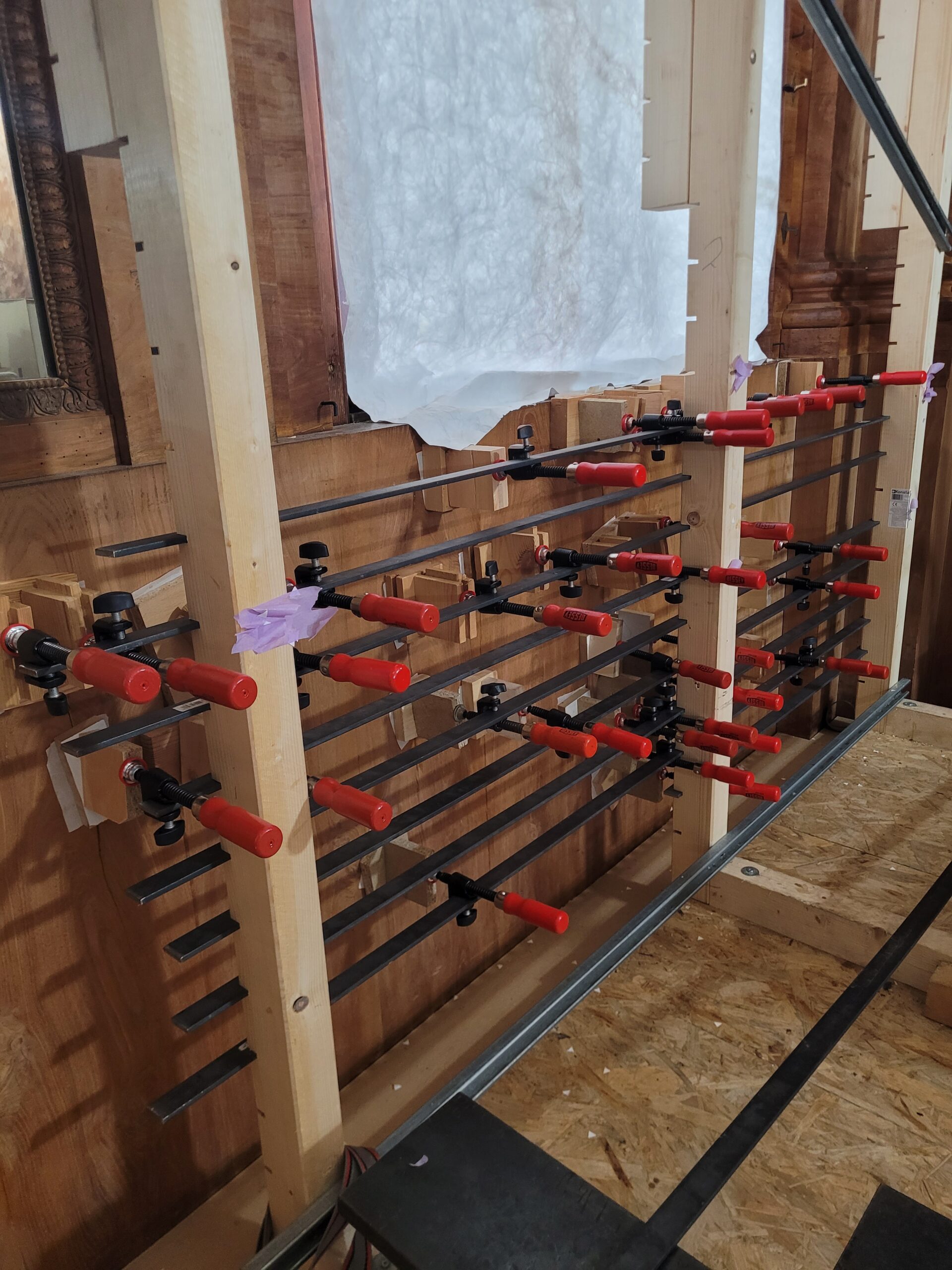
A structure for pressing down the injected areas. (Photo: Firma Broschke)
A structure for pressing down the injected areas. (Photo: Firma Broschke)
Injection work on the wall paneling. (Photo: Firma Broschke)
Restoration of Two Marquetry Floors in the Quedlinburg Castle Museum
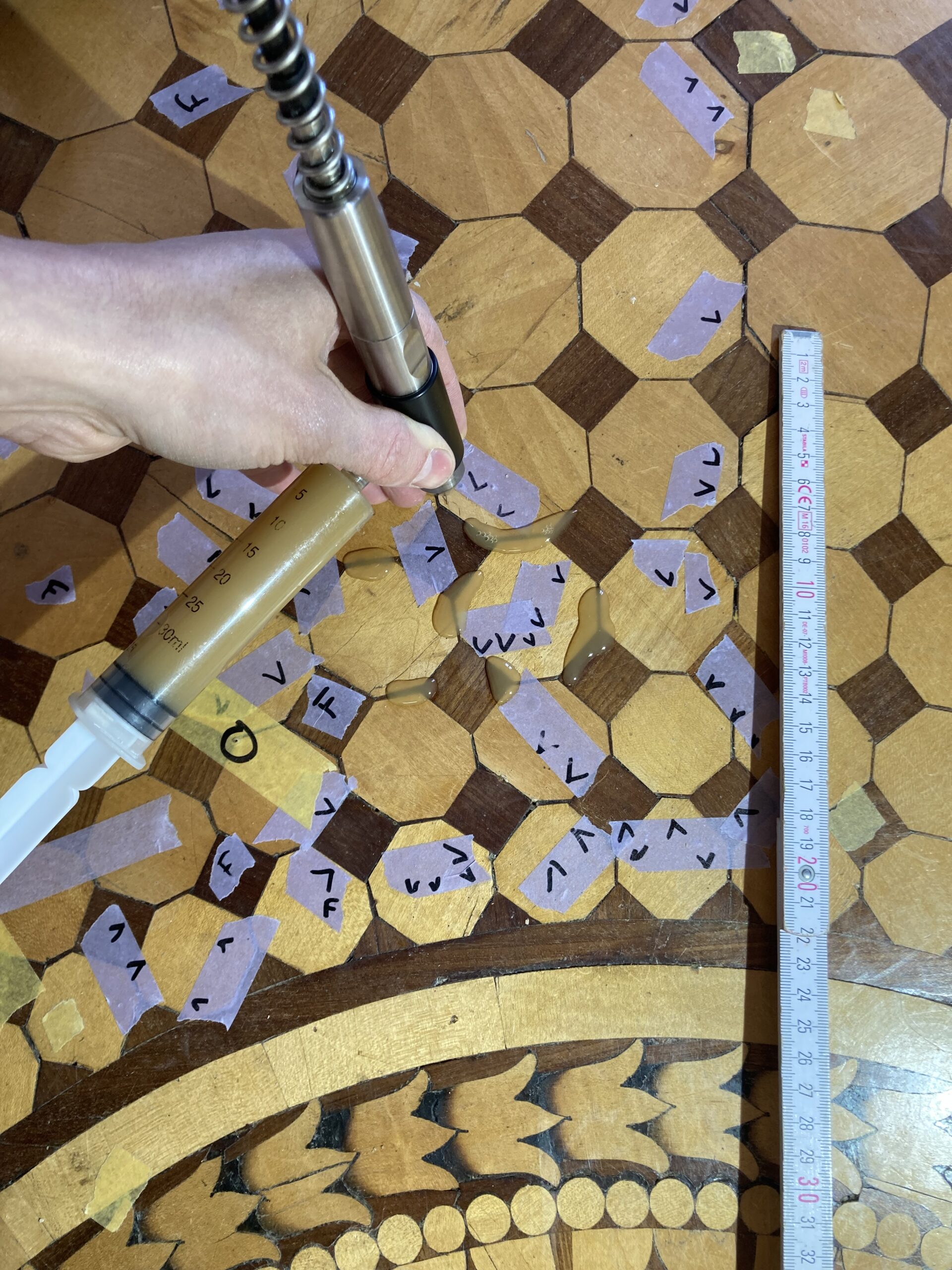
On the Stiftsberg in the UNESCO World Heritage town of Quedlinburg lies the women's convent founded by Queen Mathilde. After the last abbess, Sophie Albertine of Sweden, took office at the end of the 18th century, she had the state rooms of the convent redecorated. In the course of this, two new marquetry floors were installed. In the throne room, the subfloor for the marquetry floor was laid directly on an older solid wood floor from the 17th century. Subsequently, the marquetry was glued in situ. Due to this highly unusual procedure, the floor had a very stable subfloor on the one hand, but on the other, the gluing of the veneer in situ was already defective at the time of manufacture. The main task of the restoration was therefore the consolidation of numerous detachments in the veneer. /Procedure/ The consolidation was divided into two phases. In the first phase, all raised sections were cleaned and laid flat, all missing areas were filled, and all large-scale detachments were injected. In the second phase, the floor was carefully tapped, marking all hollow-sounding areas, even the smallest ones. This is important because every small detachment hides potential damage and can spread over time. Each of these areas was injected using Steno-injection. The 0.5 mm injection holes were mostly placed in the butt joints. /Glue/ For the bonding, a mixture of hide glue and bone glue dissolved in a water-ethanol mixture was selected. This mixture showed excellent results during in-situ testing. It demonstrated very good strength even on contaminated surfaces and, thanks to the Steno method, could be applied even at low temperatures. /Stabilization of the Substructure/ Cavities were filled with injection putty made of phenol resin microballoons and animal glue. Where the substructure exhibited excessive deflection, this mixture was injected between the structural elements, thereby stabilizing the construction.
Project management: Mathias Zimmer-Belter, Image material: Jiří Bém
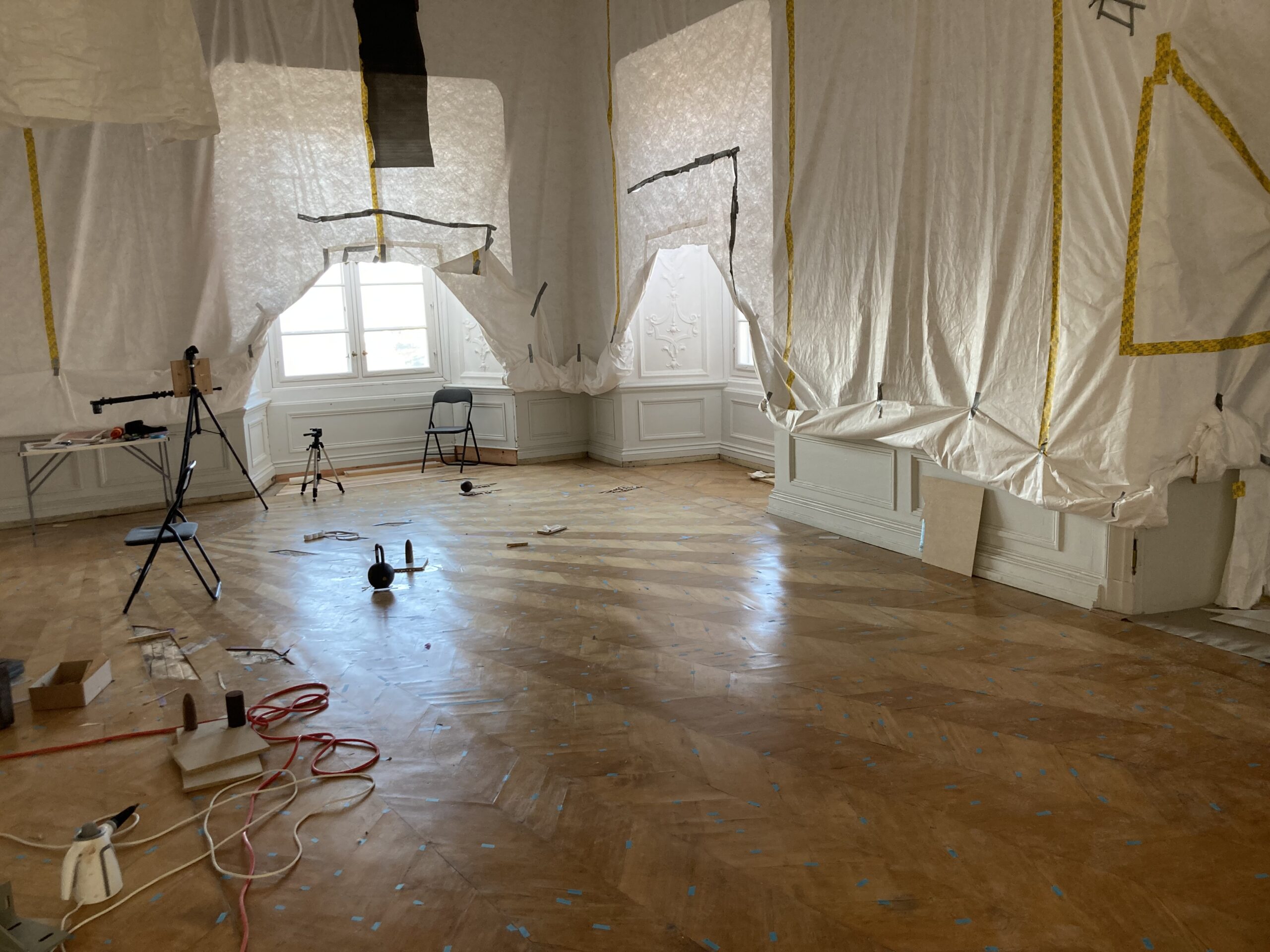
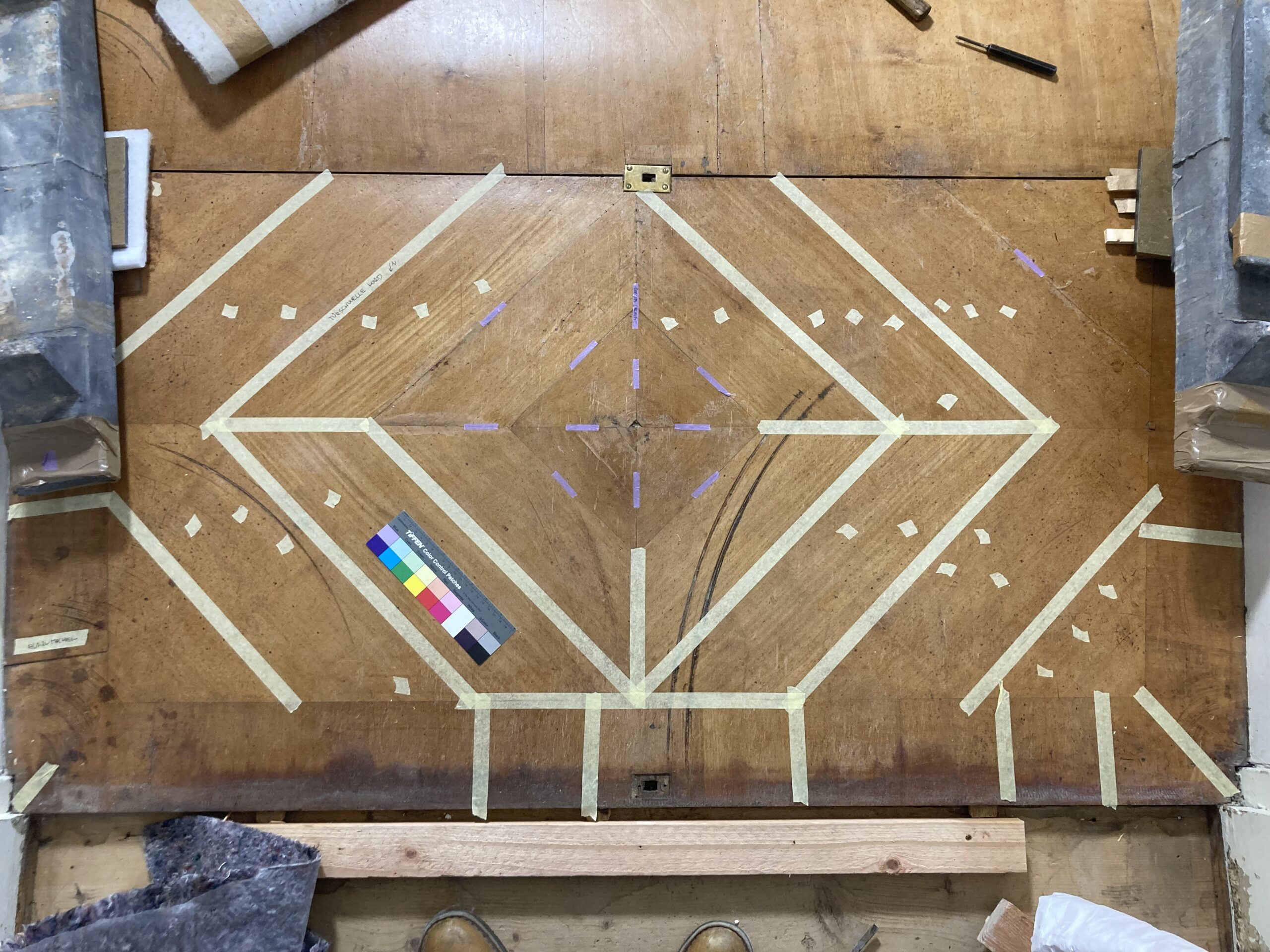
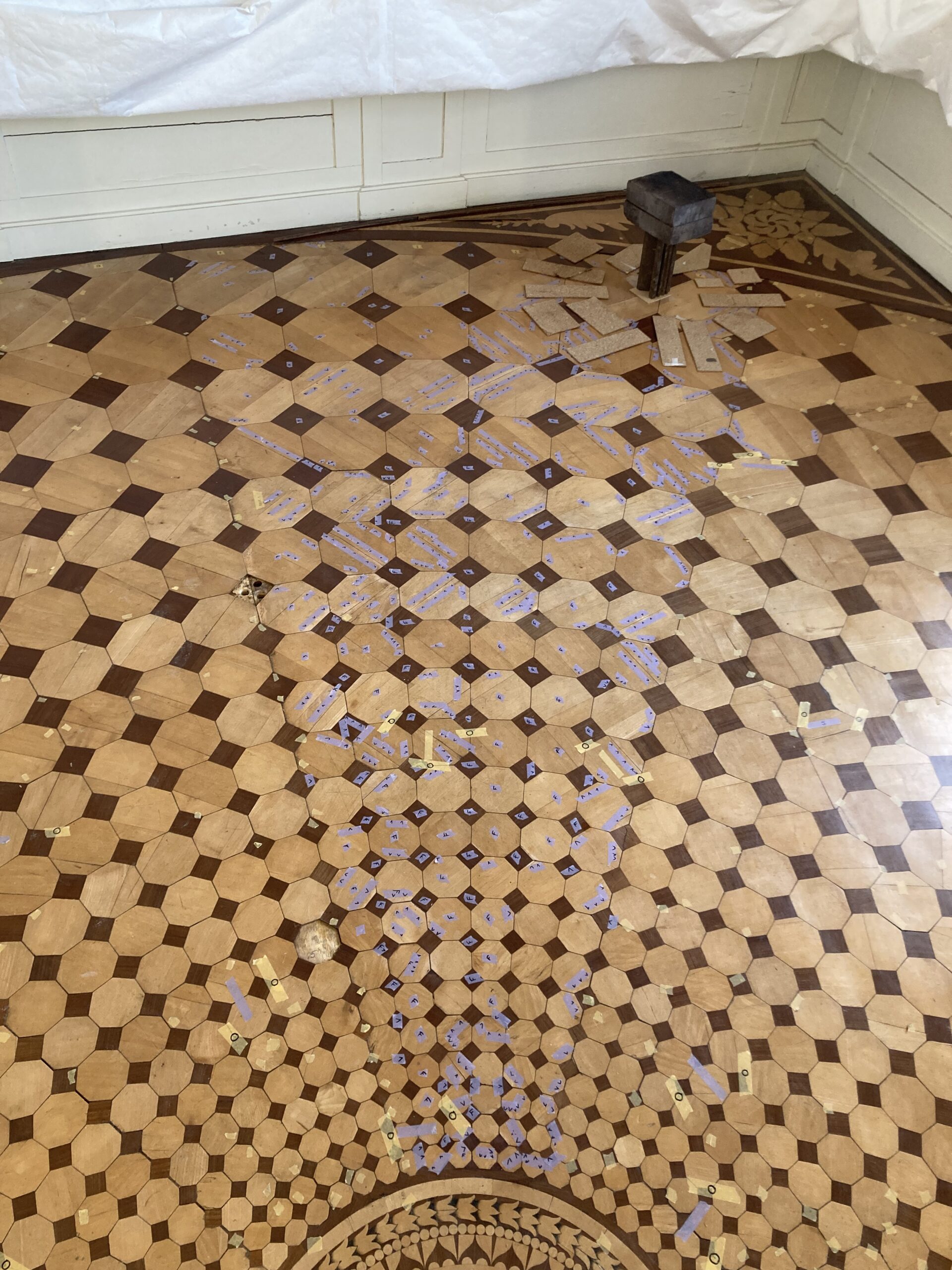
Marquetry floor in the throne room. Condition prior to the first restoration phase. Large-scale detachments are marked in blue
This detachment started out small along the joints and spread beneath the entire surface over time
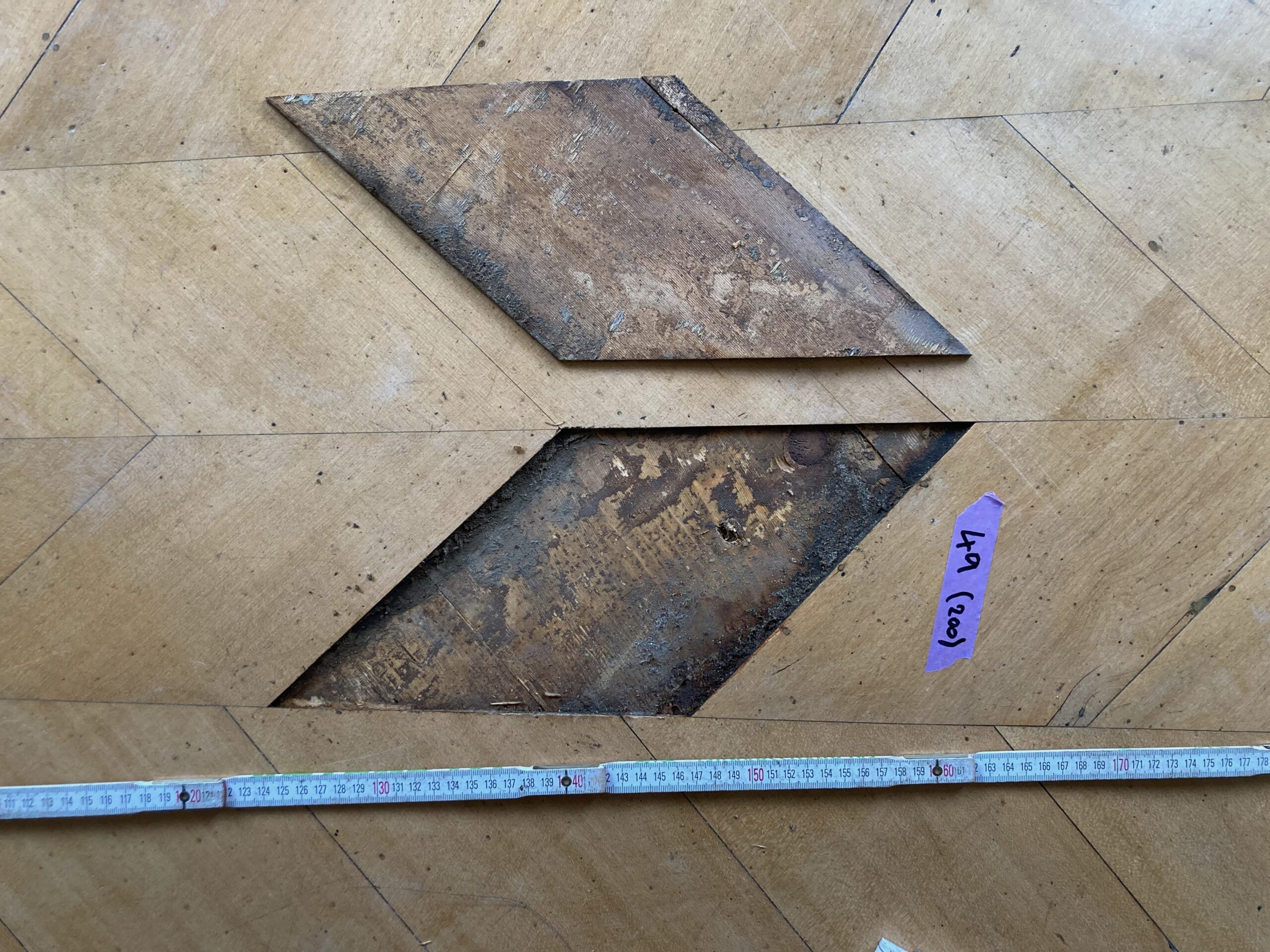
Loss of substance at a raised corner. This damage could also have been avoided through timely measures
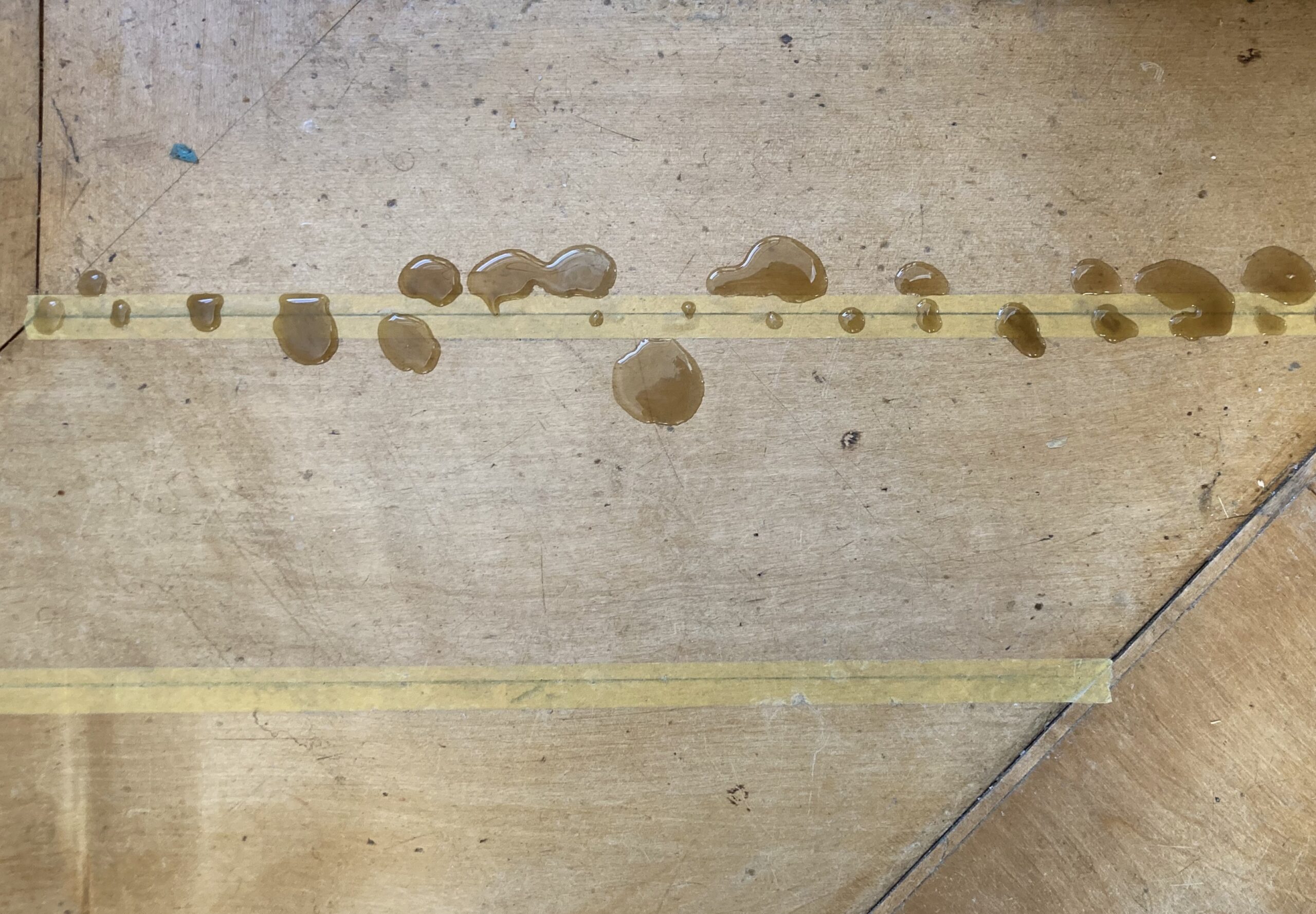
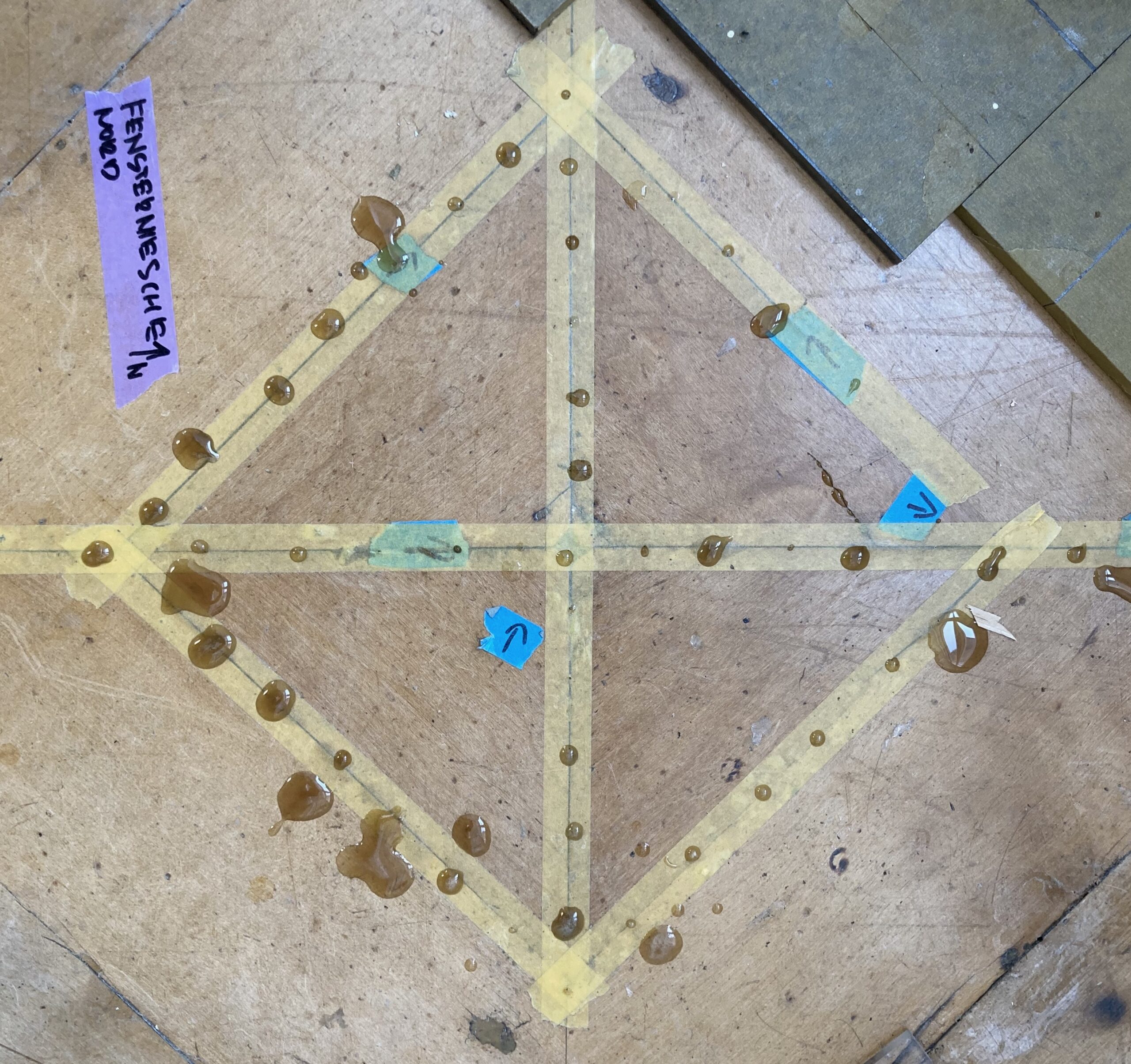
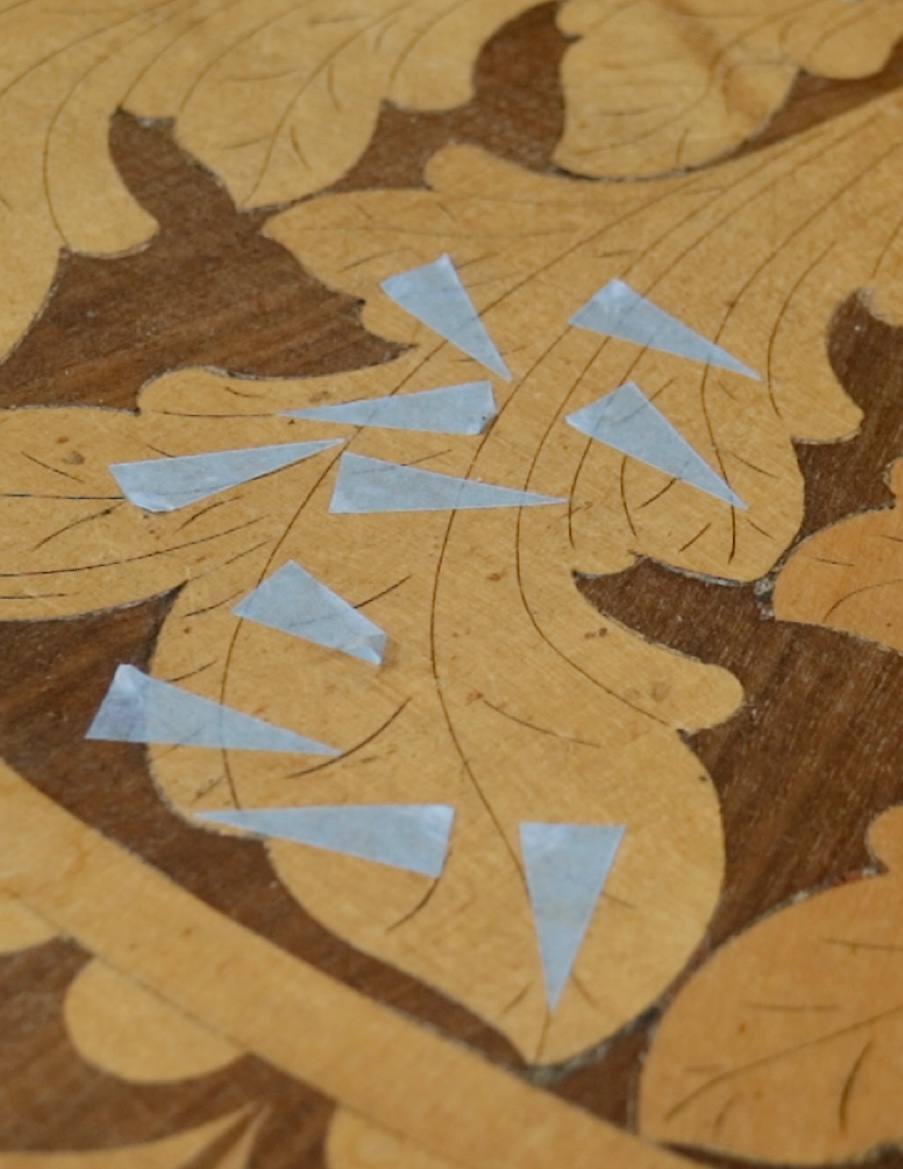
Markings for injection on a threshold. Most boreholes were set into the butt joints through adhesive tape
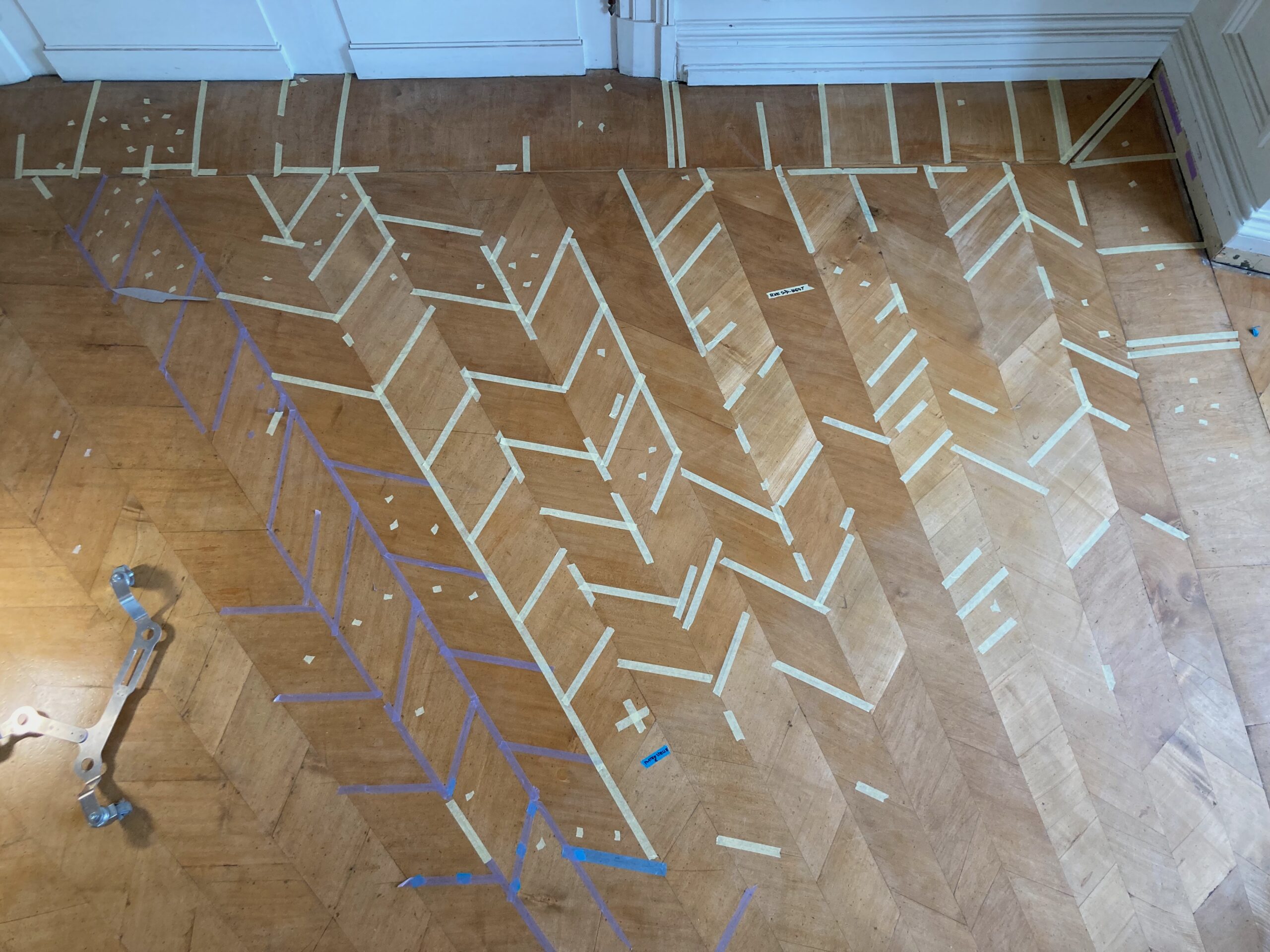
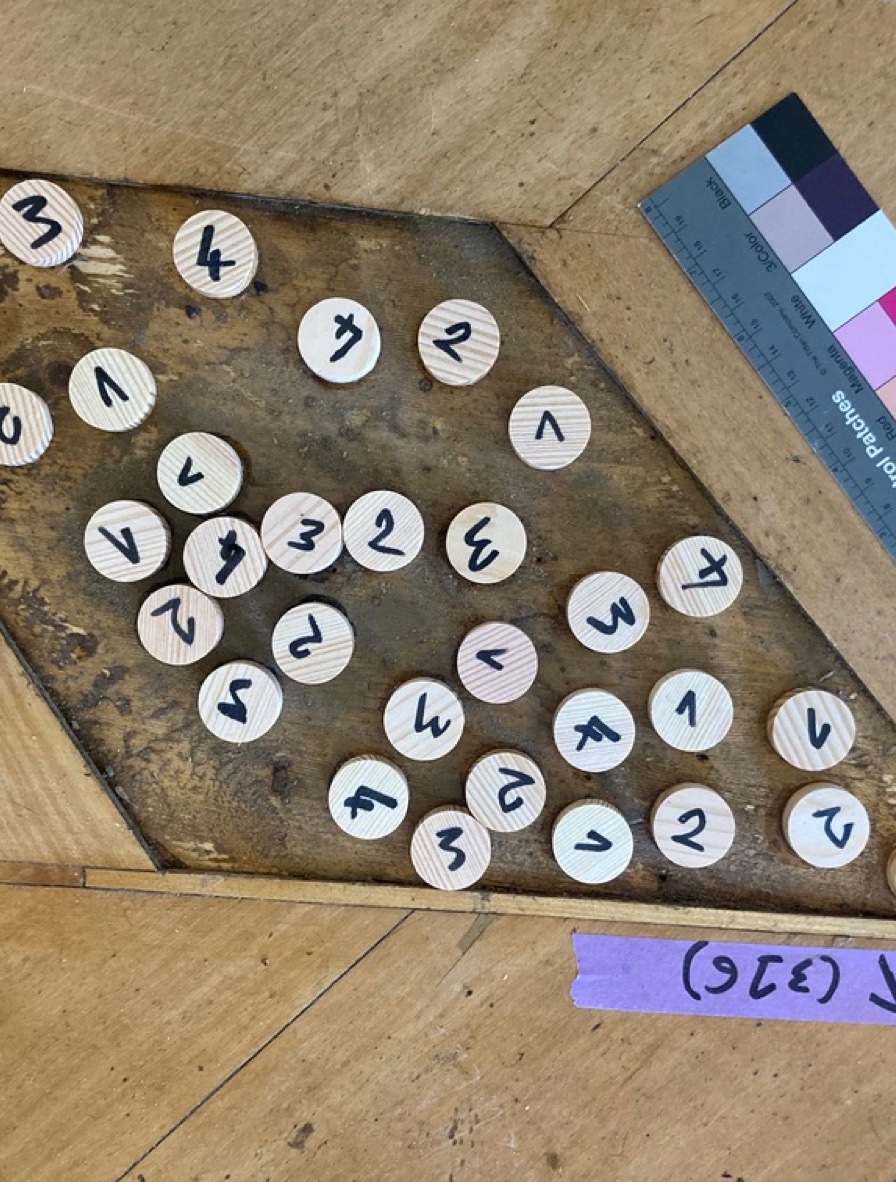
Marking of remaining detachments for the second phase of injection
Under a display case was a seemingly intact floor. Yet almost every joint exhibited instability upon tapping
Glue samples on contaminated surfaces showed surprisingly high strength
Animal glue is capable of bridging wide joints even without filler
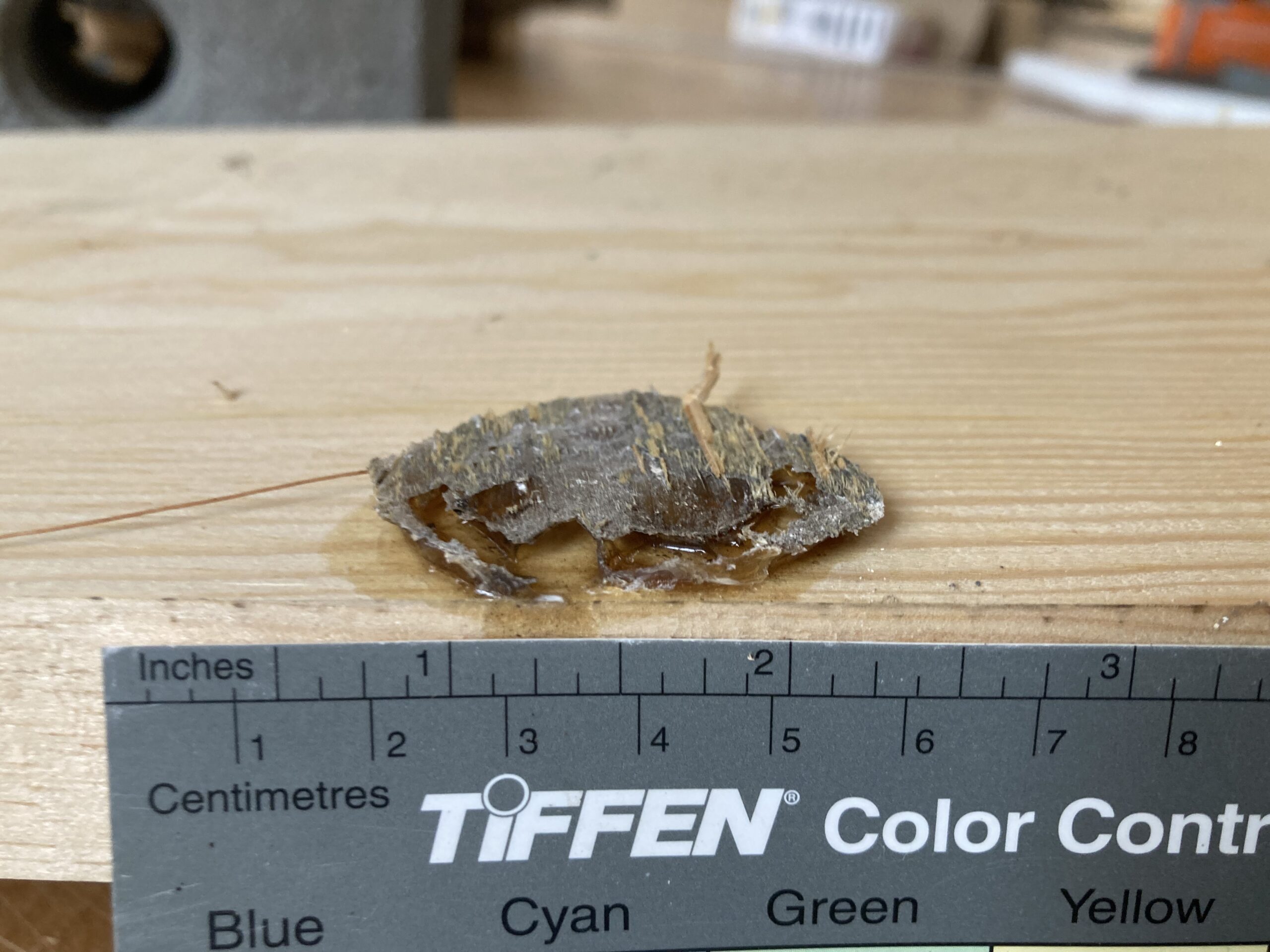
Glue residue following injection in a butt joint
Consolidation of the joint area on a threshold
Final condition in the throne room
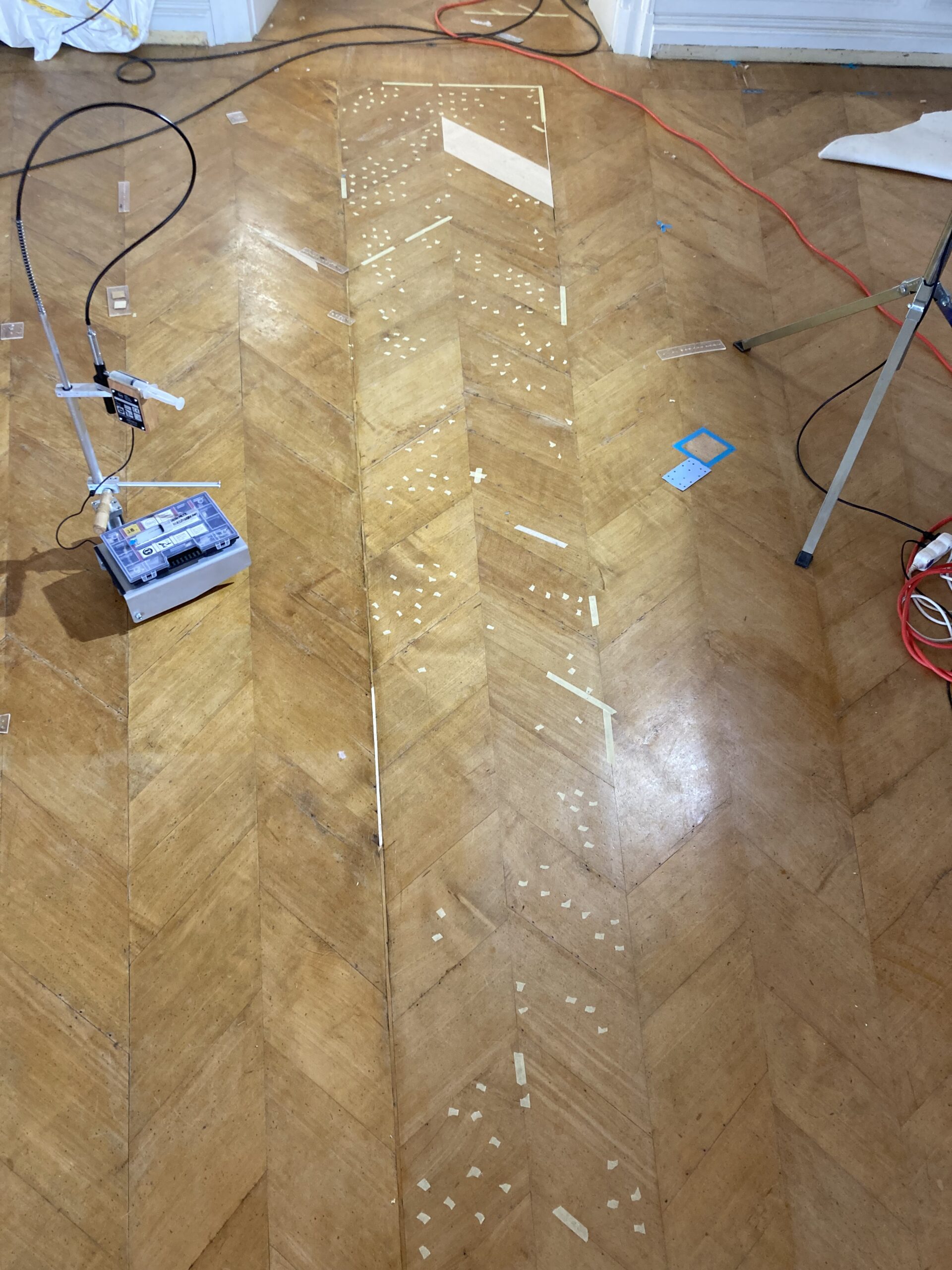
Marking of detached areas on the floor in the "Arbeitszimmer" shows a large number of detachments
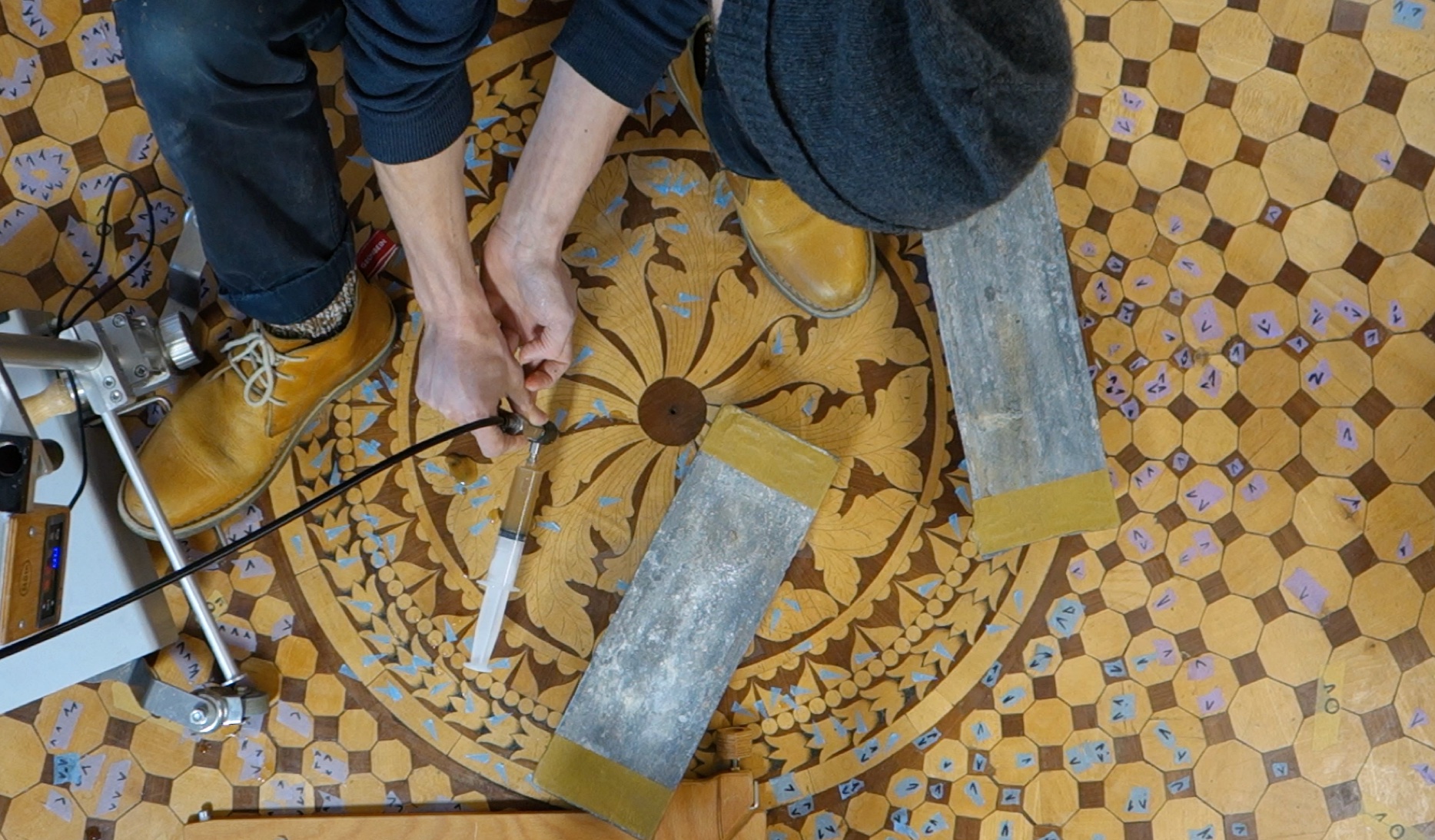
Injection of the intricate marquetry. These areas can only be glued effectively with Steno-injection
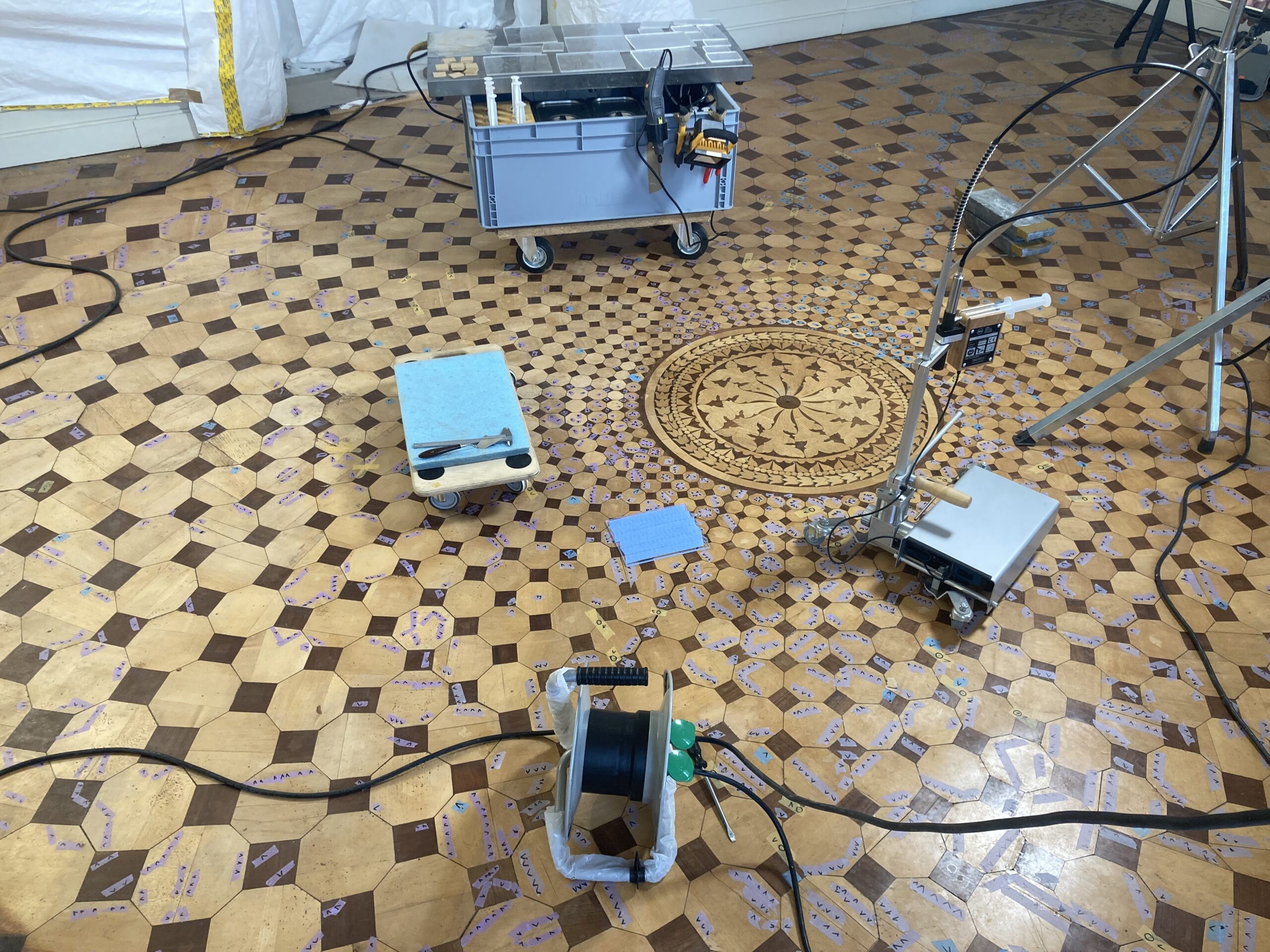
Working situation in the "Arbeitszimmer"
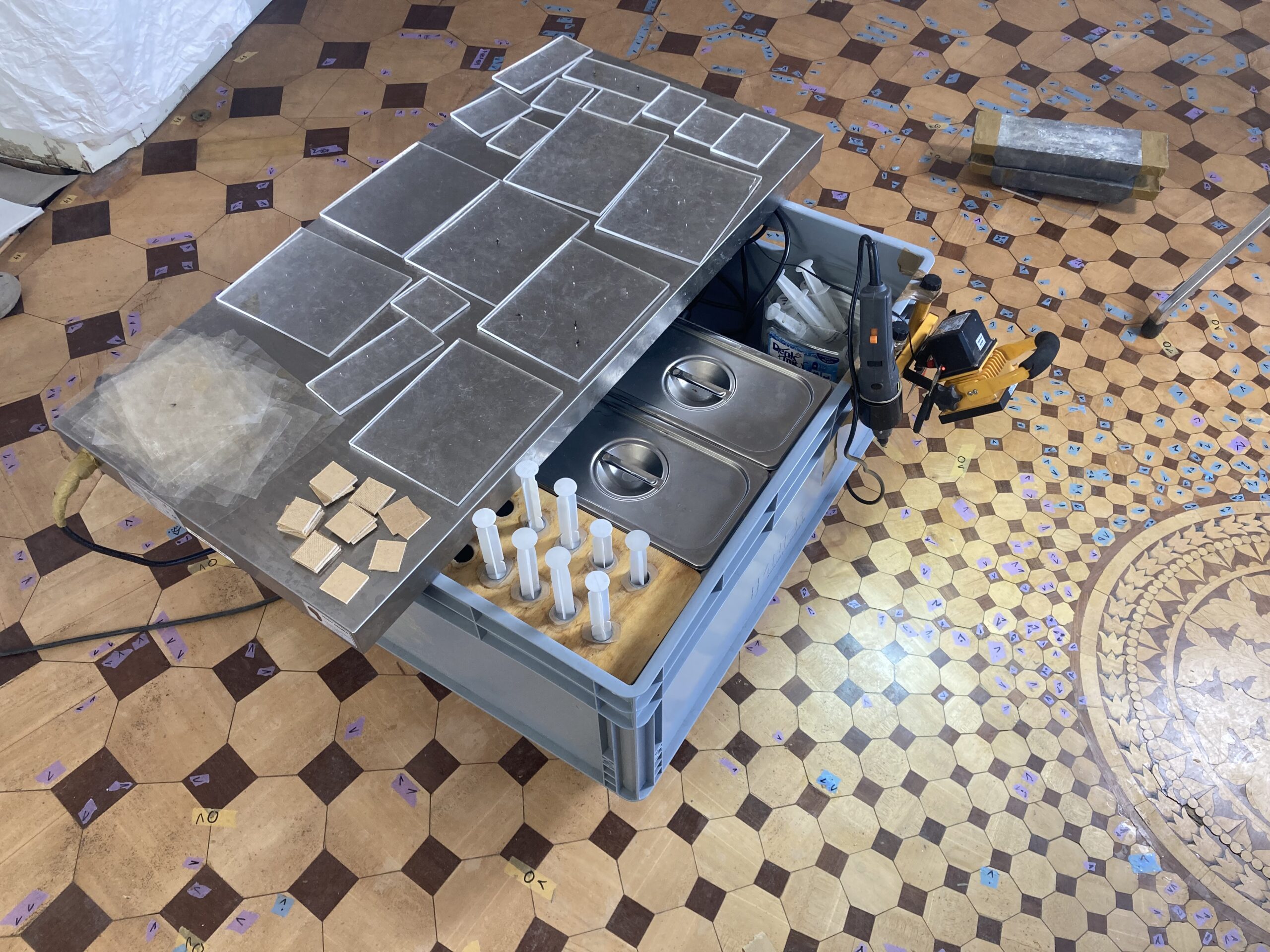
A trolley with injection equipment
Marking with adhesive arrows
Injection at the rosette
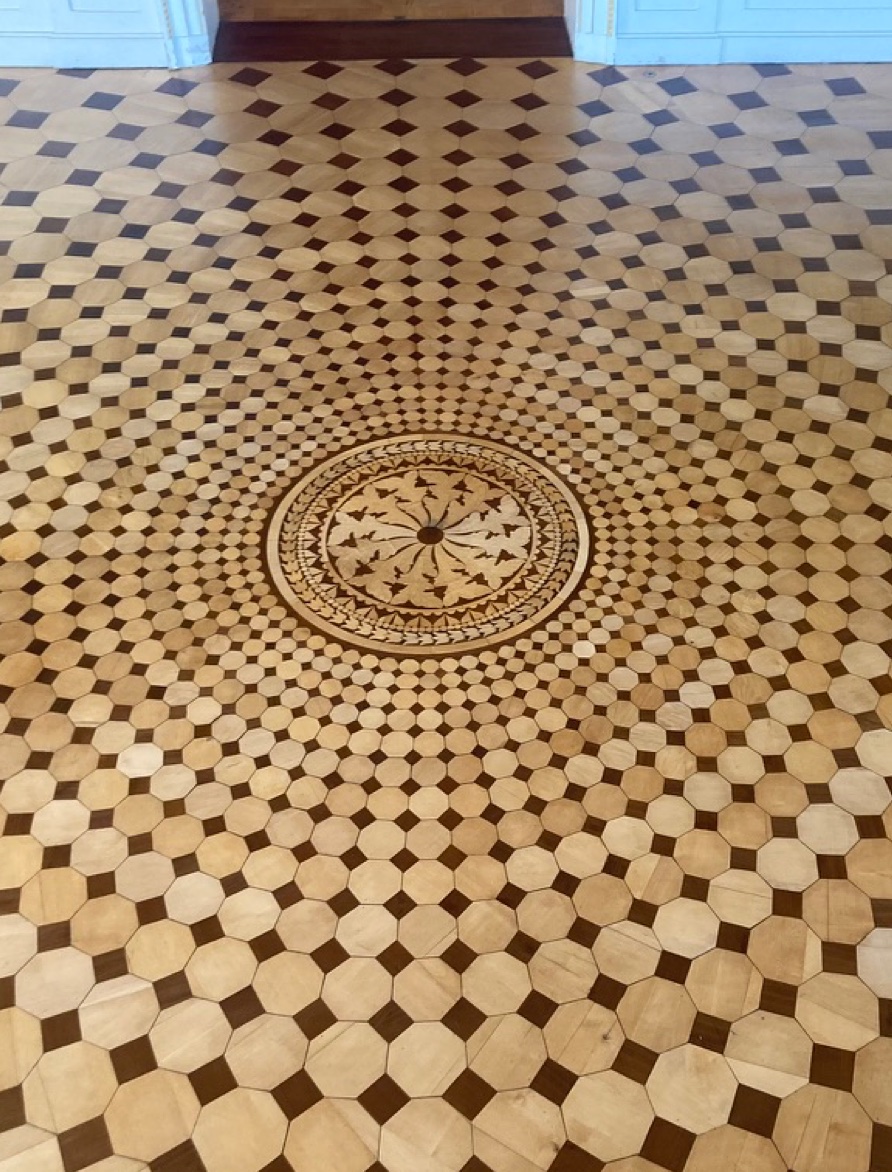
Finished floor in the Arbeitszimmer
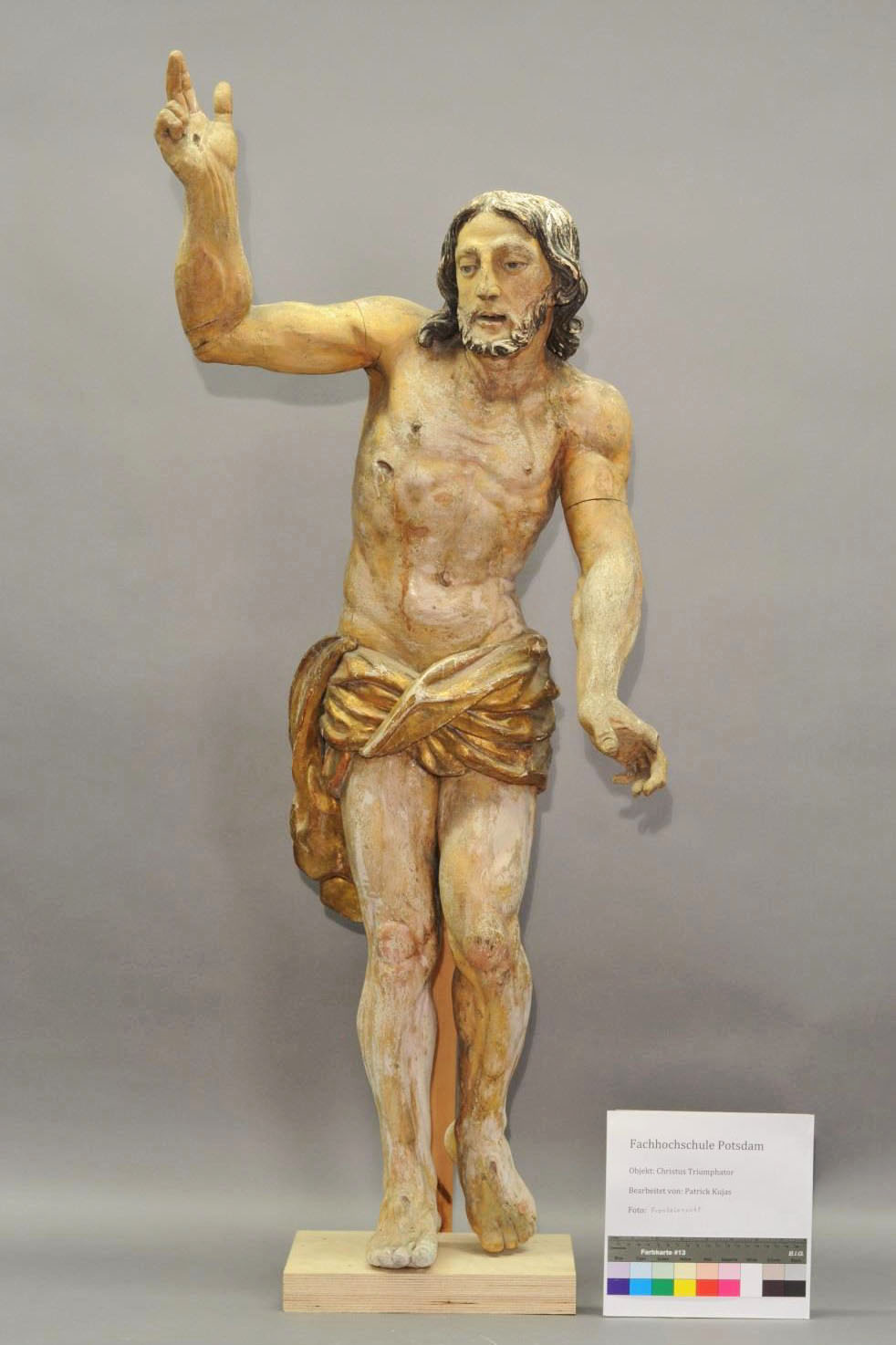
Polychrome Figure of Christ from the 18th Century
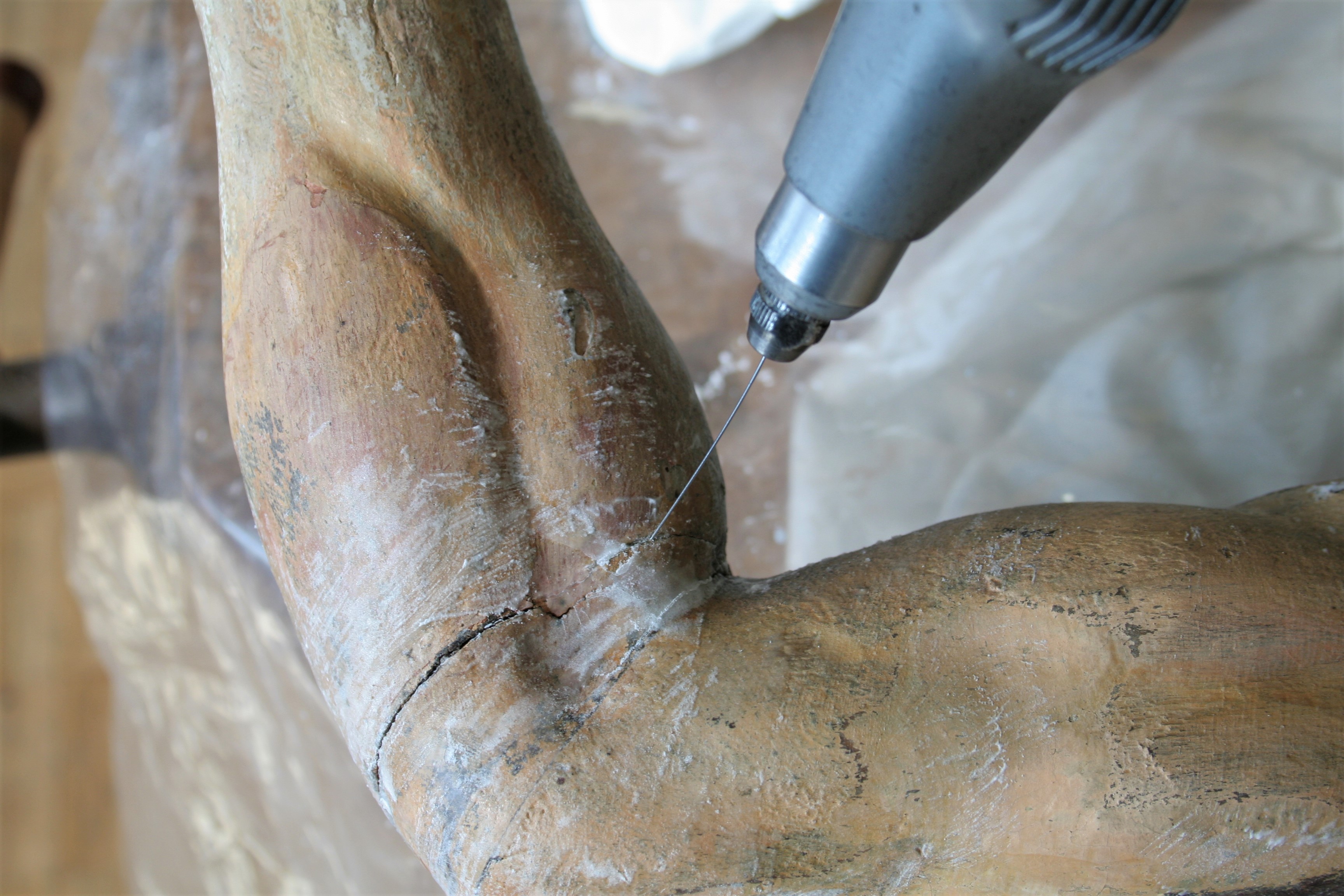
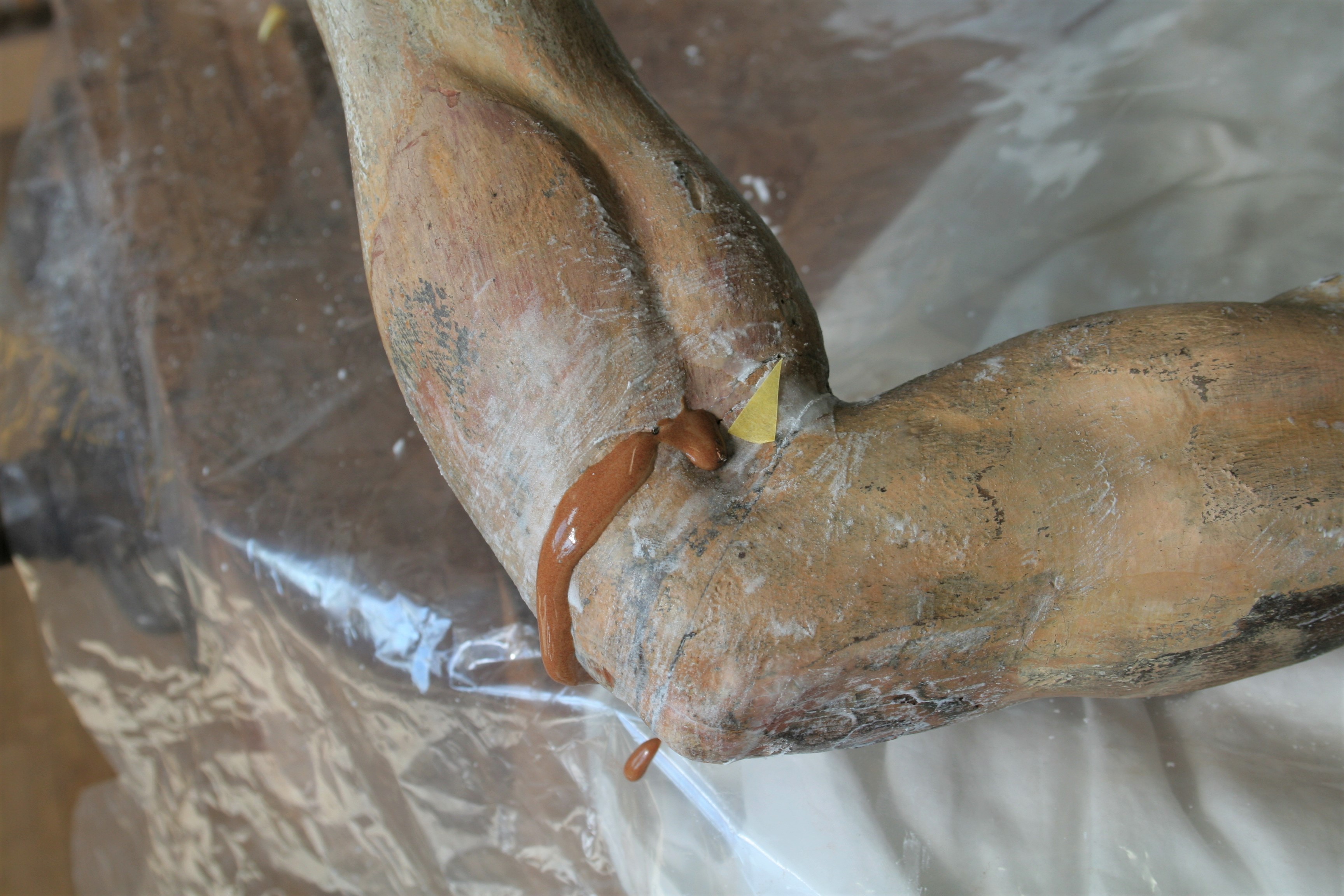
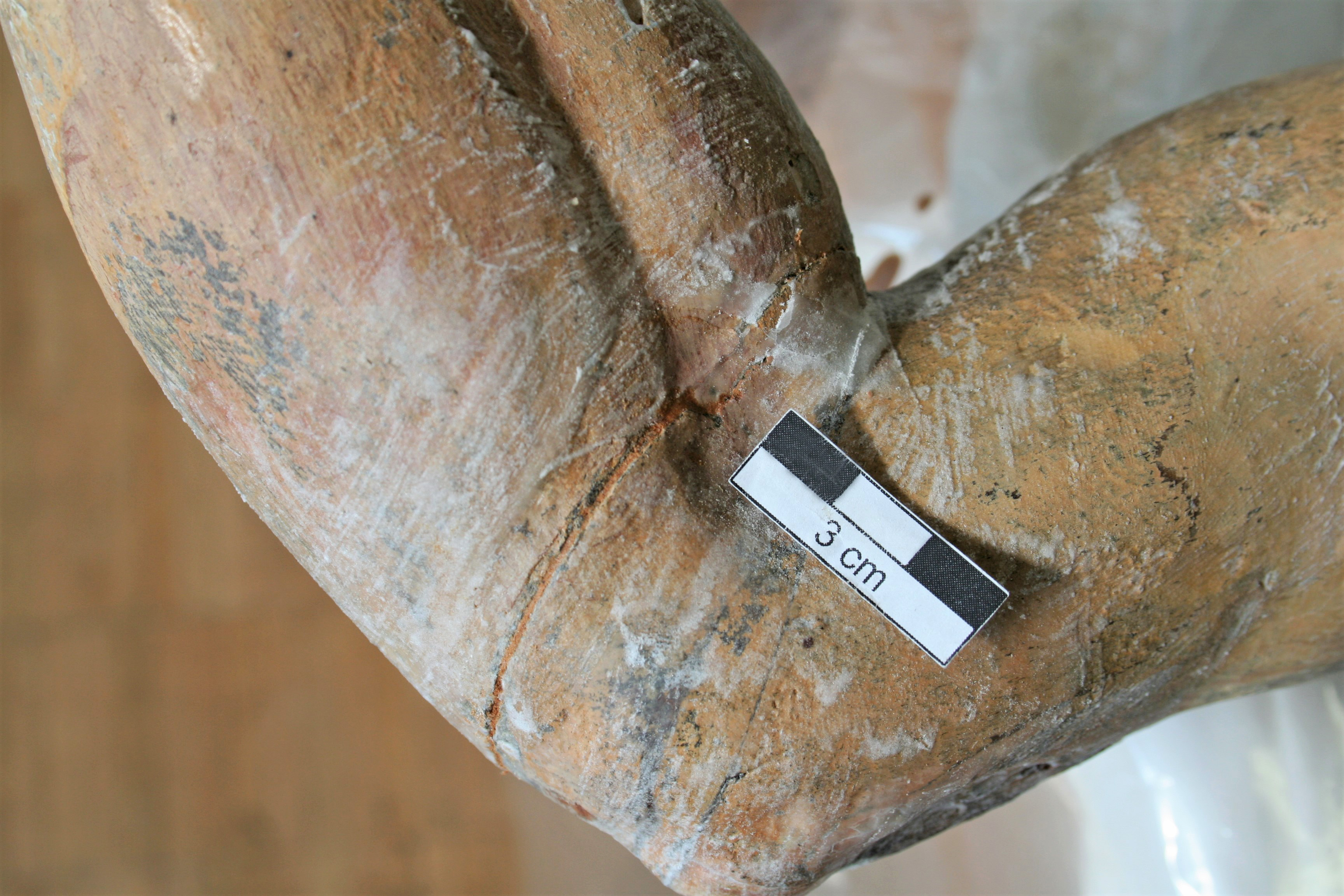
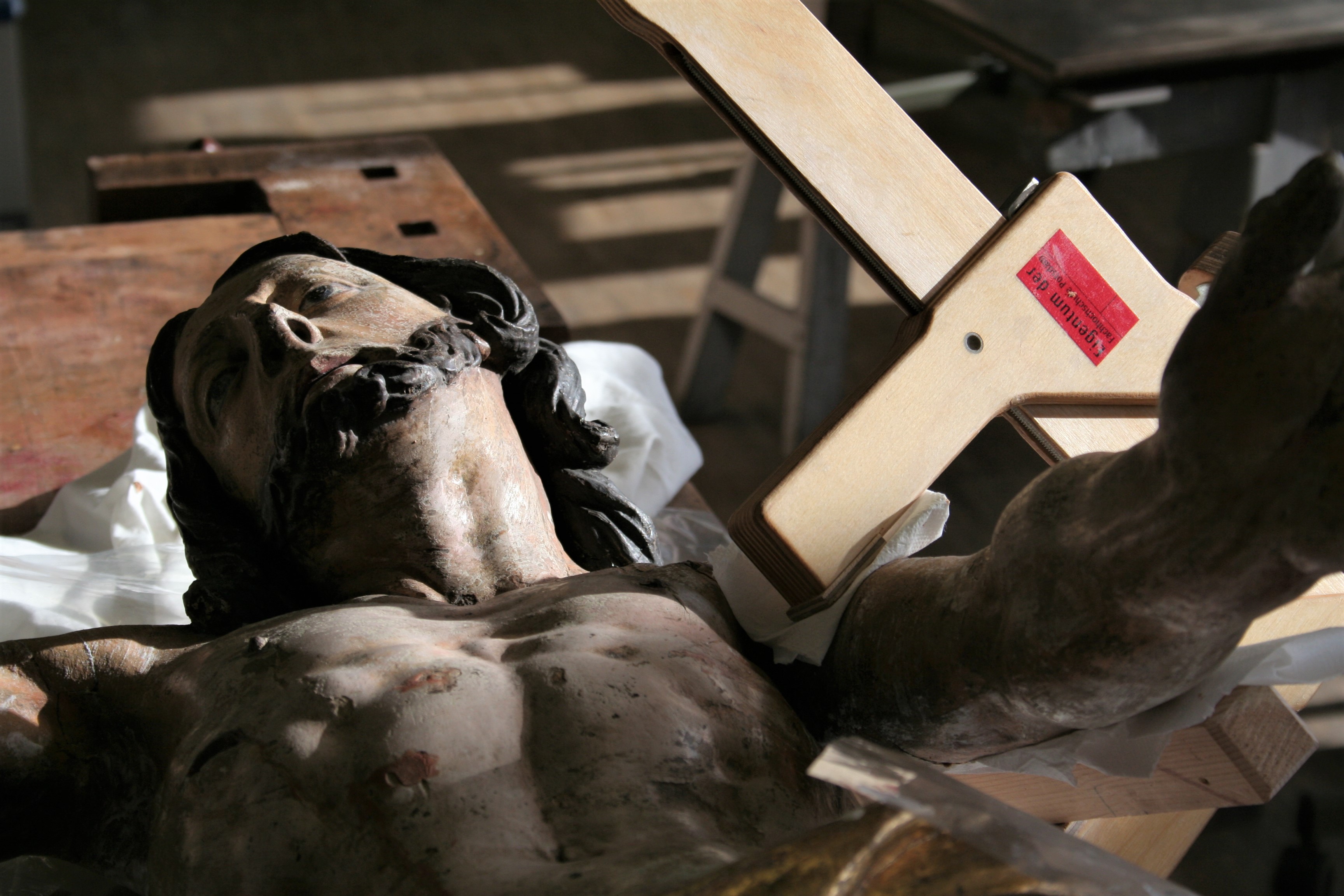
Filling a cavity in the loose joint of a polychrome wooden sculpture with a mixture of phenol resin microballoonsand hide glue through a cannula diameter of 0.6 mm. (Project at FH-Potsdam, processed by Patrik Kujas, overall image: P. Kujas)
Oak Table with Marquetry from the 19th Century
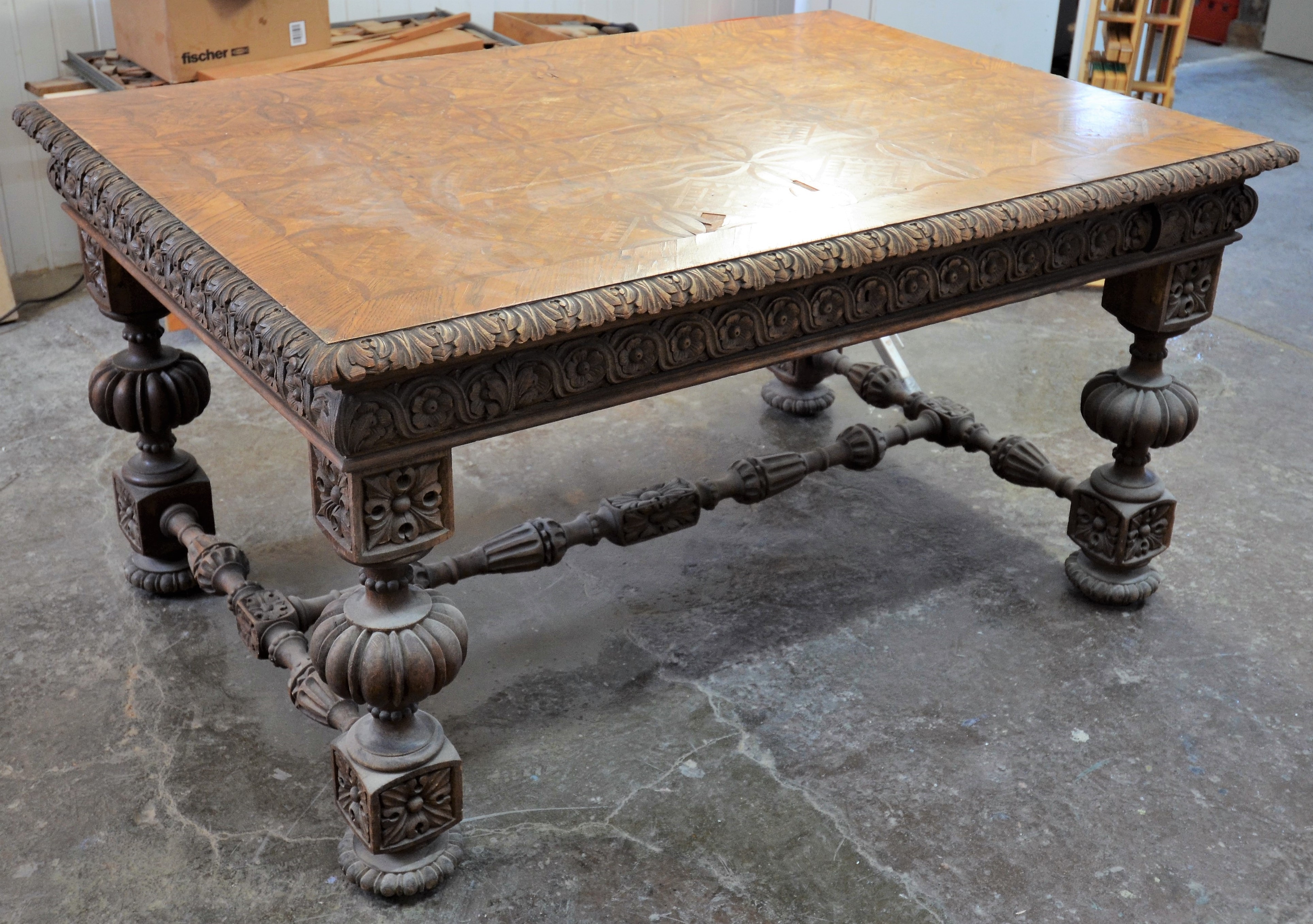
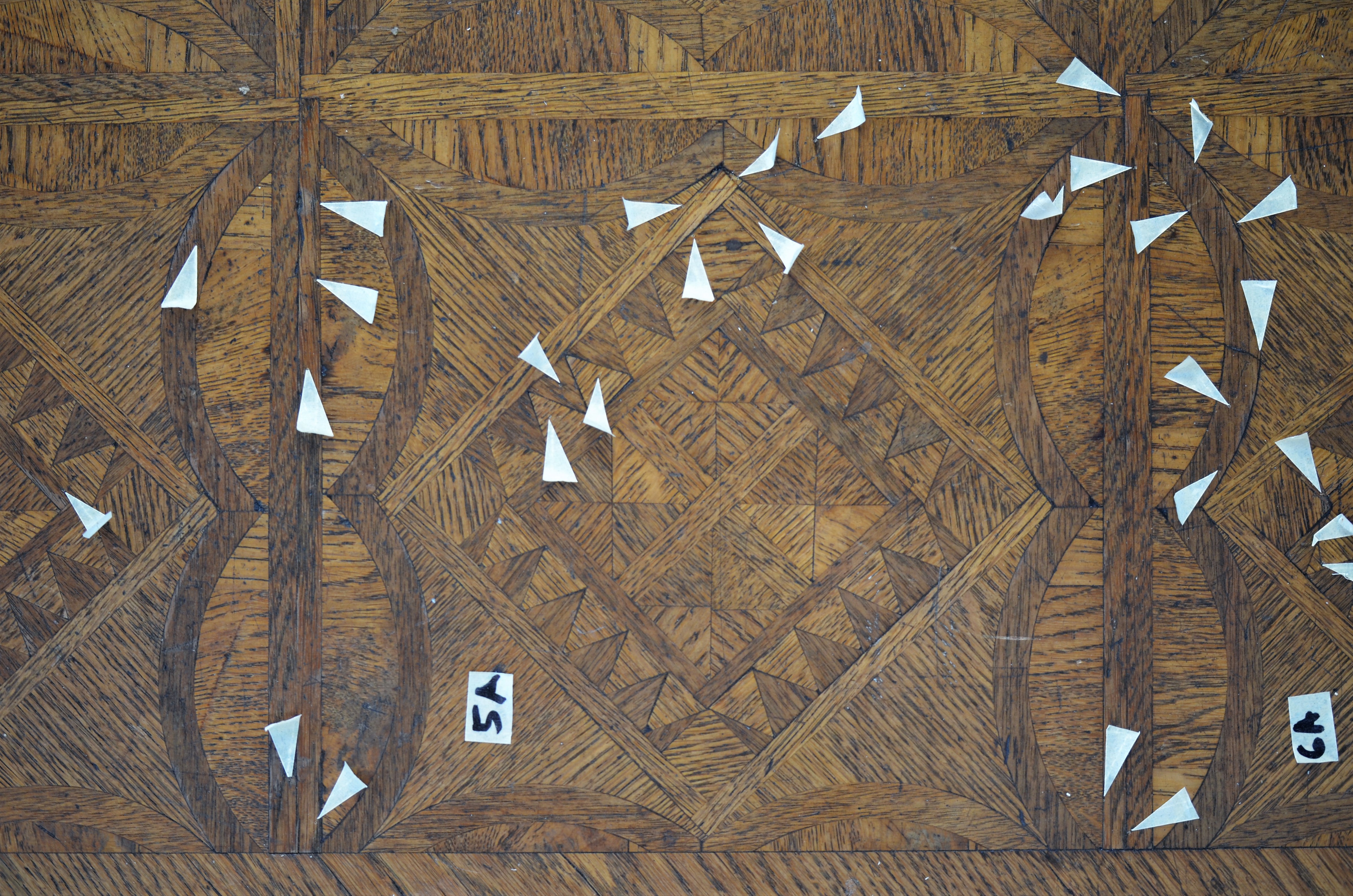
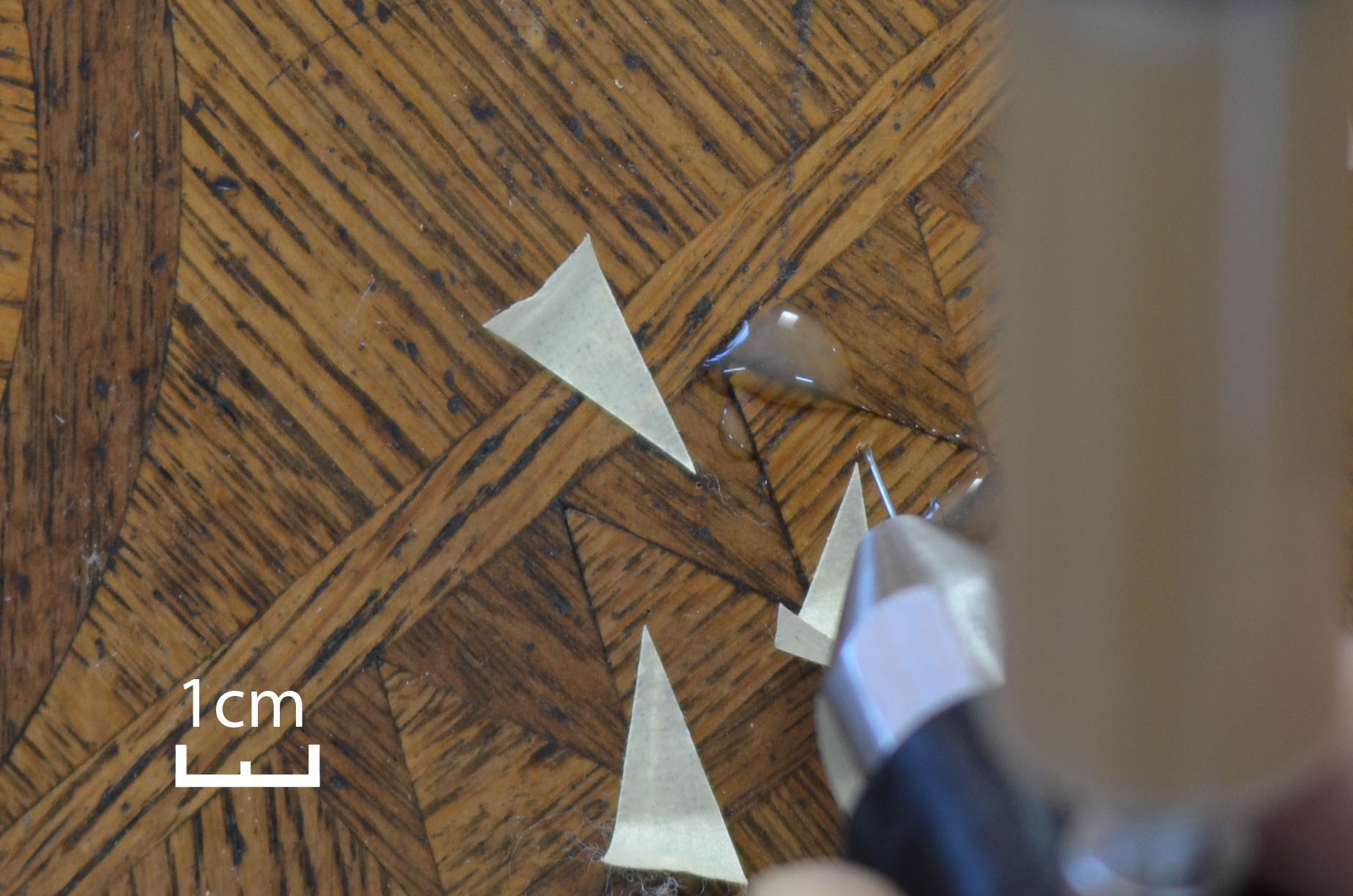
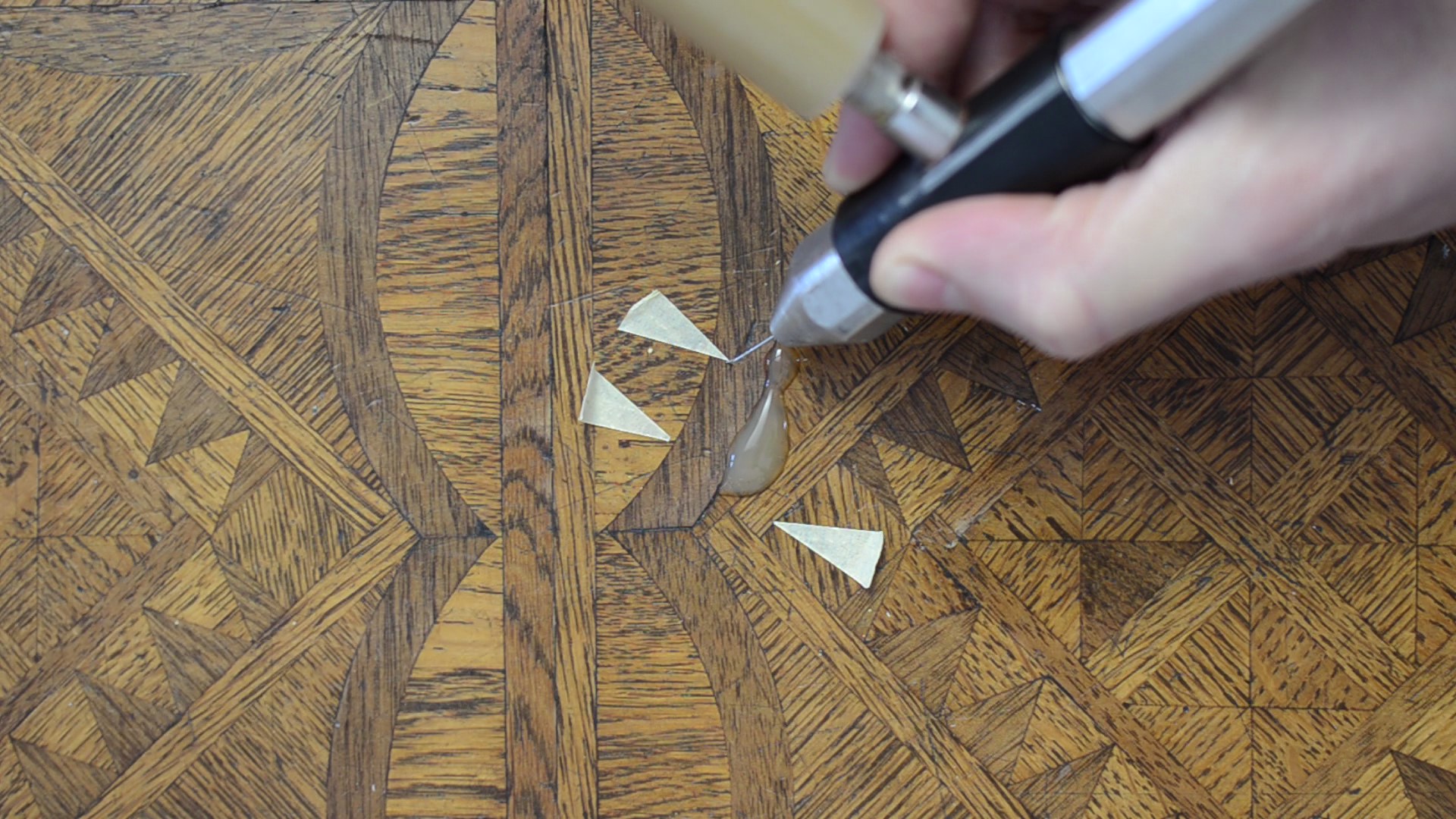
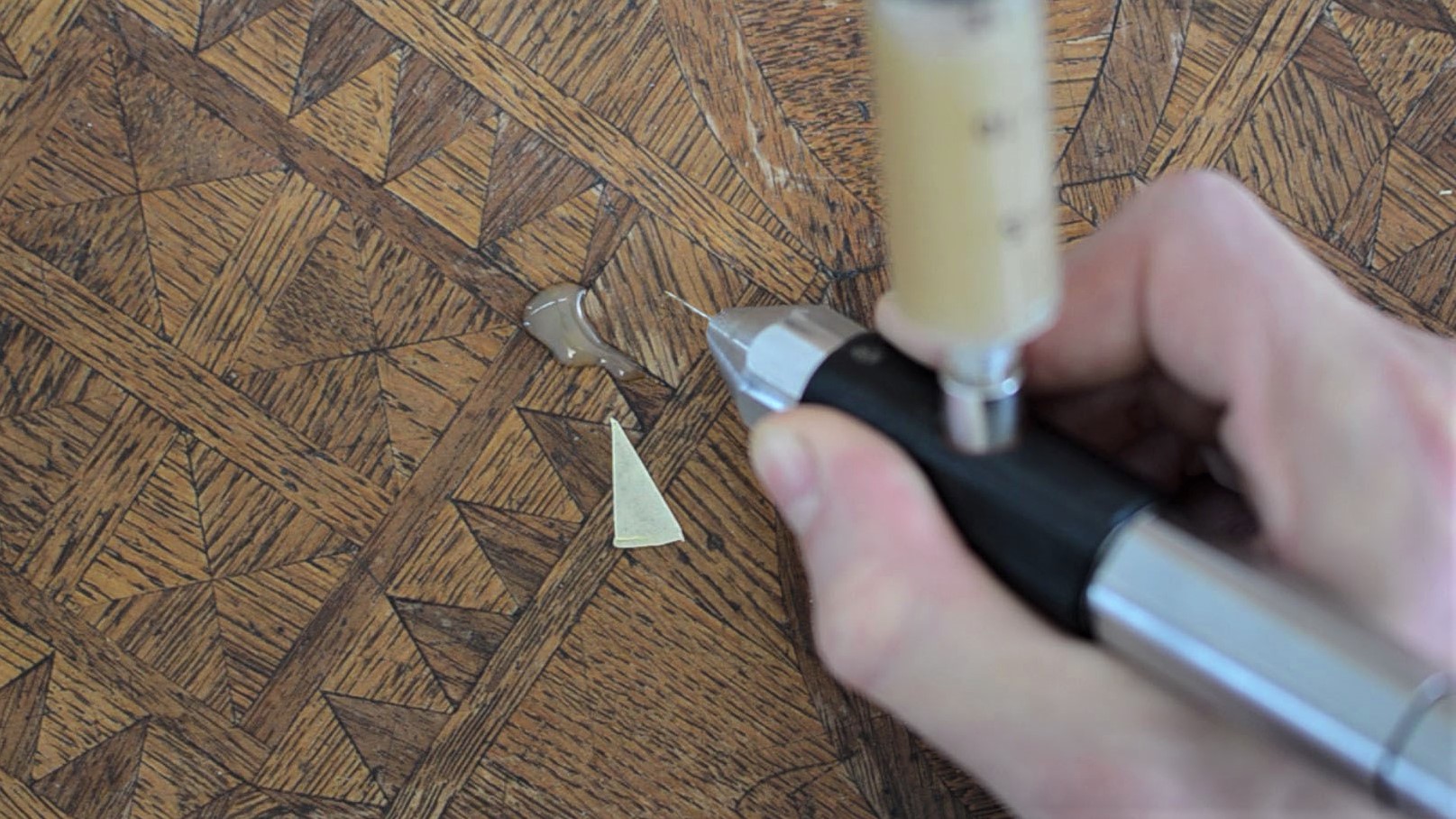
Consolidation of marquetry on a 19th-century state table. The marquetry comprised over 2,000 pieces of walnut and oak wood, of which approximately 20% exhibited an unstable glue joint. Despite the weakened bonding, most pieces could not be lifted or removed. A 30% rabbit skin glue was injected through a 0.3 mm cannula. Because the borehole diameter is smaller than the pore size, the measure remains completely invisible to the viewer. See also the video of the injection in the video section.
(Project by the company Akanthus Restaurierungen GmbH, Eberswalde)
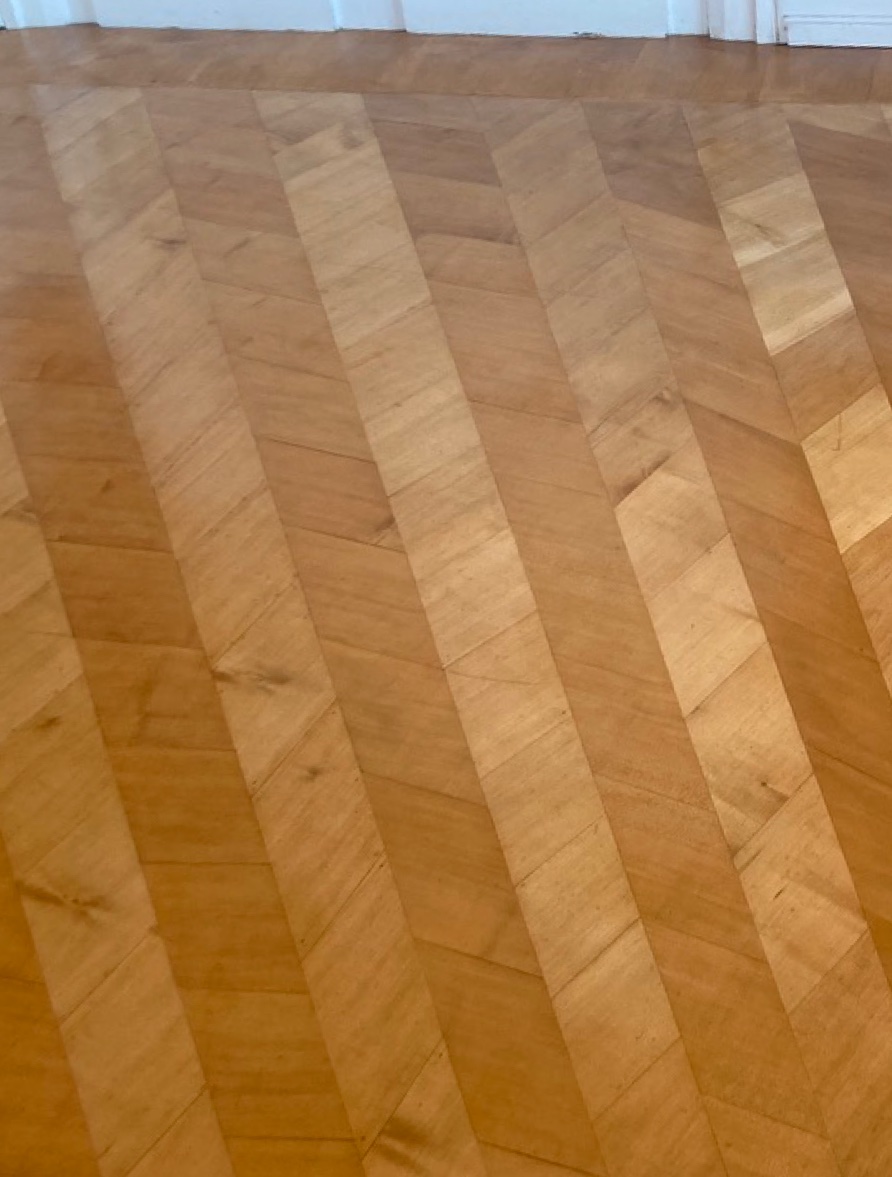
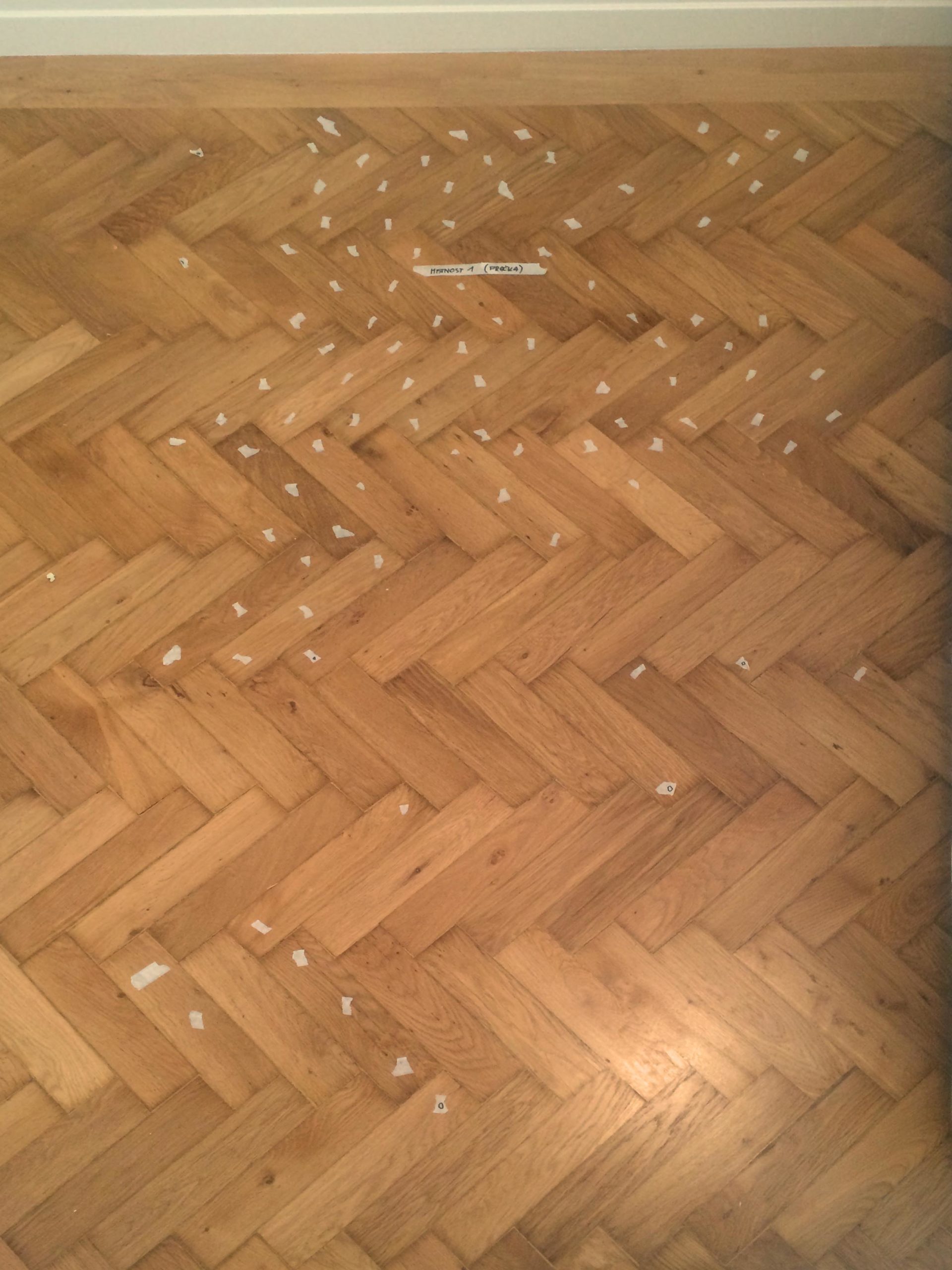
Parquet Flooring on Concrete Substrate
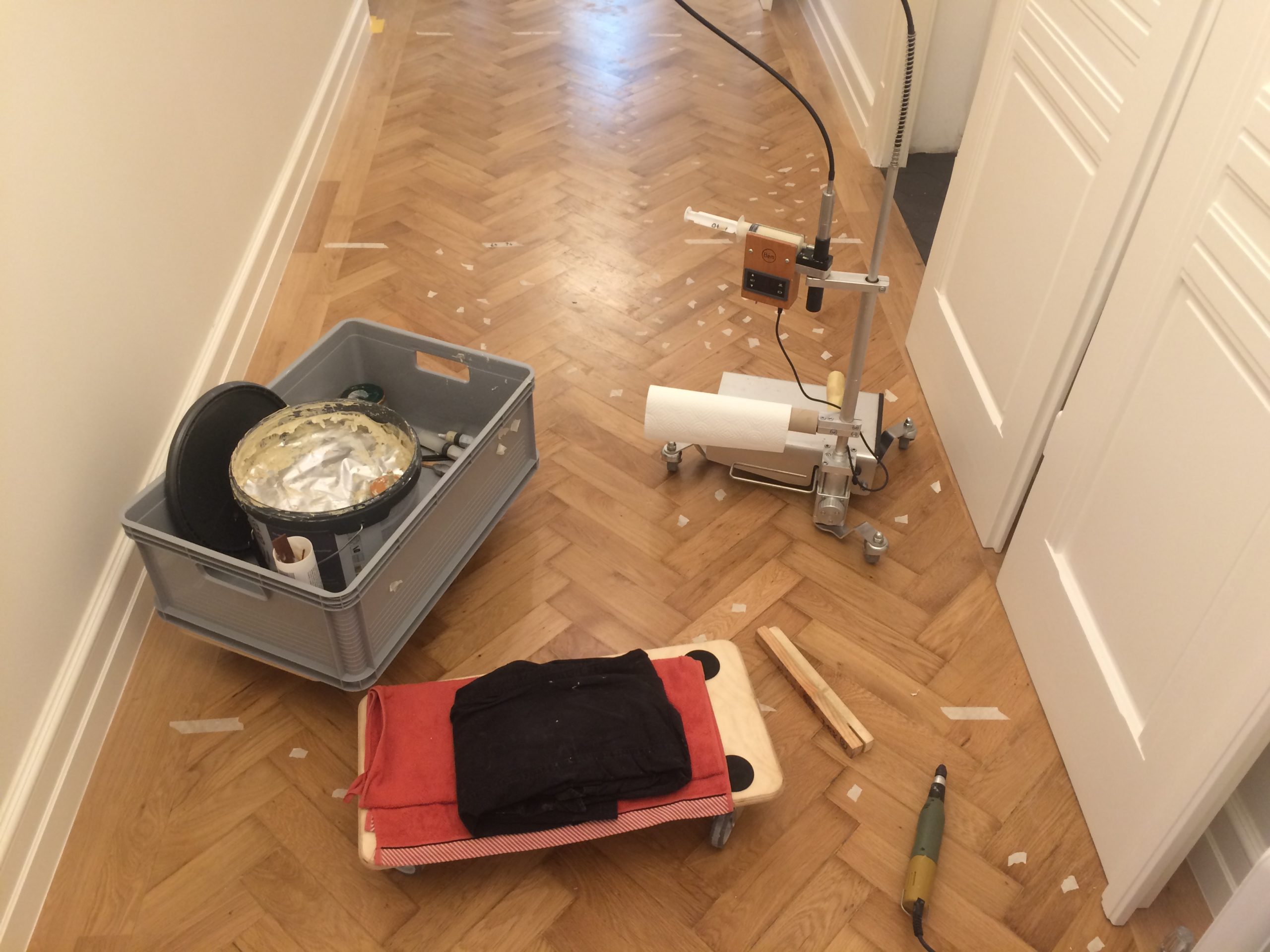
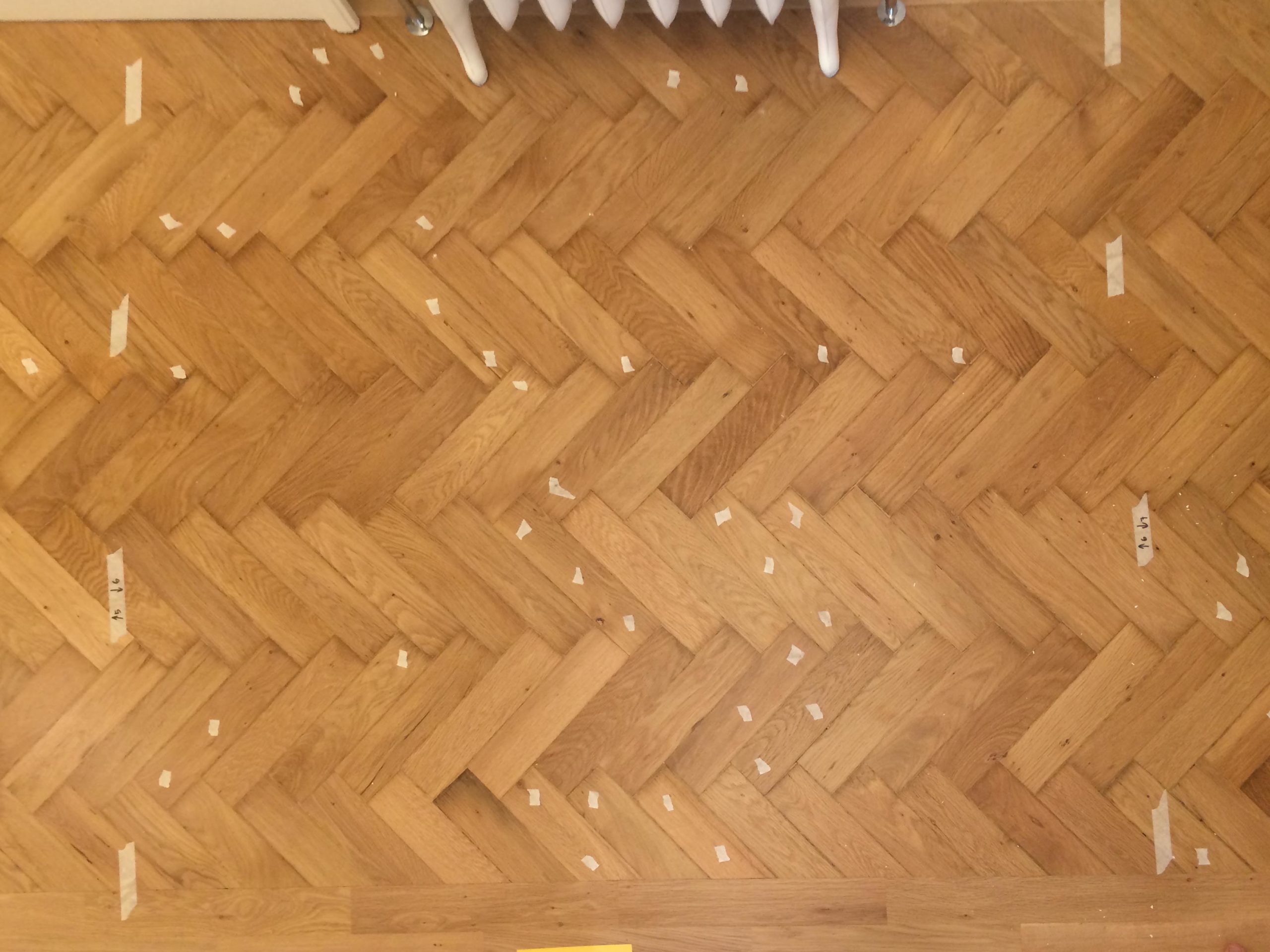
Consolidation of incorrectly laid parquet flooring in a private apartment. In this measure, silane adhesive was injected under loosened parquet strips through a 0.6 mm cannula. Through a total of 500 injection holes, approx. 14 kg of adhesive was applied. The drilling positions were marked with adhesive strips. The 0.6 mm holes are indistinguishable in the oak structure from eye level and are therefore acceptable to customers who did not request a repair for aesthetic reasons. We offer the consolidation of modern floors as a service only. The injection of silane adhesive is not covered by our warranty on new machines.