Modern, Minimally Invasive Injection Technique for the Restoration of Wooden Objects
#StandWithUkraine
Injection machines
Projects
Videos
References
The technology
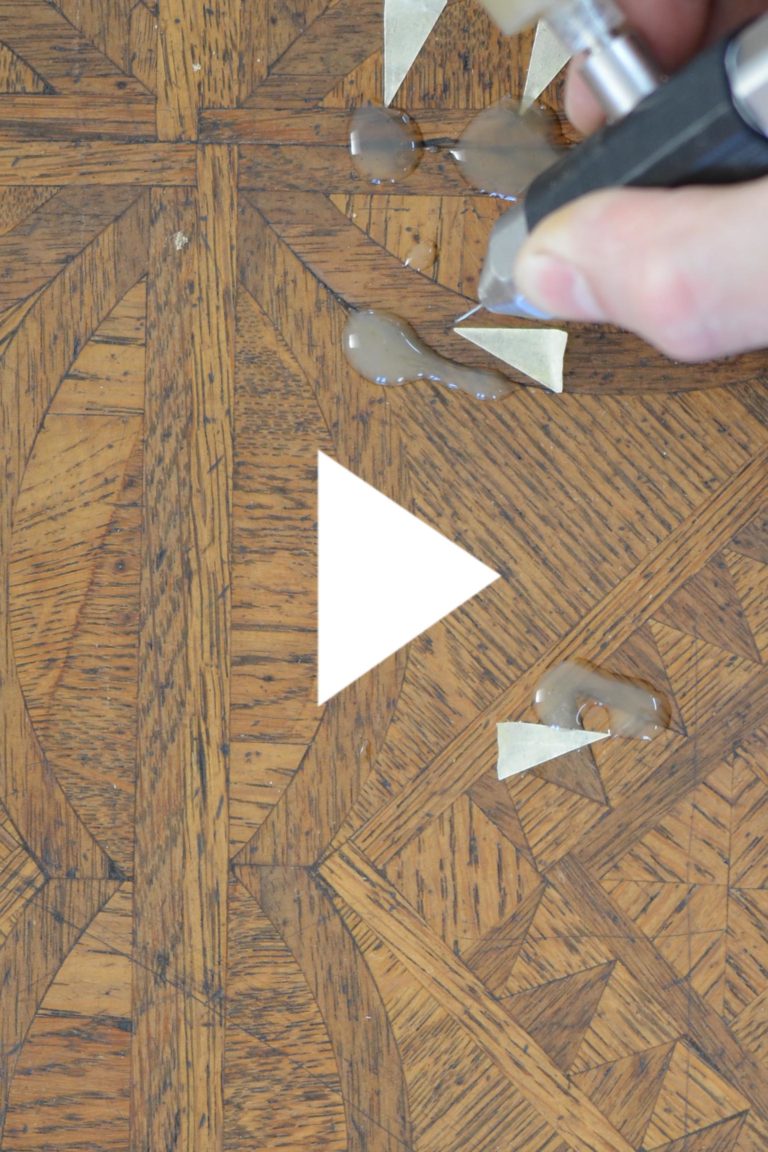
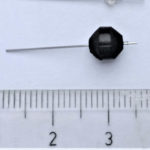
Steno-injection is a modern, minimally invasive technique specially developed for wood restoration to complete a wide range of gluing tasks faster, more precisely, and, above all, with significantly less loss of original material. This technique enables viscous materials—such as glues, consolidants, or putties—to be dispensed quickly and with high precision through the smallest cracks and openings. The glue is kept warm inside a piston cartridge, making it ready for immediate use at any time for small gluing jobs of all kinds. When the target area cannot be reached through an open joint or crack, minimal holes are drilled using a wire drill. A 0.7 mm wire drill can penetrate up to 20 cm of beechwood, making all adhesive locations inside a wooden object fully accessible for Steno-injection.
Structural joints can be consolidated without disassembly, which can prevent significant loss of original substance, especially in upholstered or polychrome objects. This technique can inject viscous glue through holes as small as 0.3 mm, which remain virtually invisible in the wood structure.
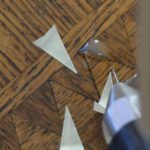
However, this technique was not only developed for sensitive and delicate objects. It can pay off quickly, particularly on large projects such as panel parquet, veneered wall panelling or veneered church furnishings, while simultaneously contributing significantly to the preservation of the fabric.
The benefits of technology
It enables viscous animal glues to be injected quickly and precisely through the smallest cracks and openings.
The injection cannulas have an outer diameter of up to 0.3 mm. A drill hole of this size is almost invisible in the wood structure.
The technology is capable of reaching all glue joints inside wooden objects and consolidating them without dismantling. As a result, the loss of original material during restoration is significantly reduced and many hours of work are saved.
The injection machine can serve as a glue dispenser throughout the entire restoration and thus replace the glue pot. The application of the glue is very rapid, precise and clean.
The adhesive is heated in a piston cartridge and therefore always has the same concentration, purity and temperature.
The cartridges can be replaced within seconds. This allows the injection material to be changed during a single injection.
The machine can inject many materials, such as warm animal glues, putties, consolidants, or synthetic adhesives.
The high versatility of the technique allows a single machine to process delicate objects as well as flooring or interior fittings.
This technique saves your time, expands your possibilities and protects your objects!
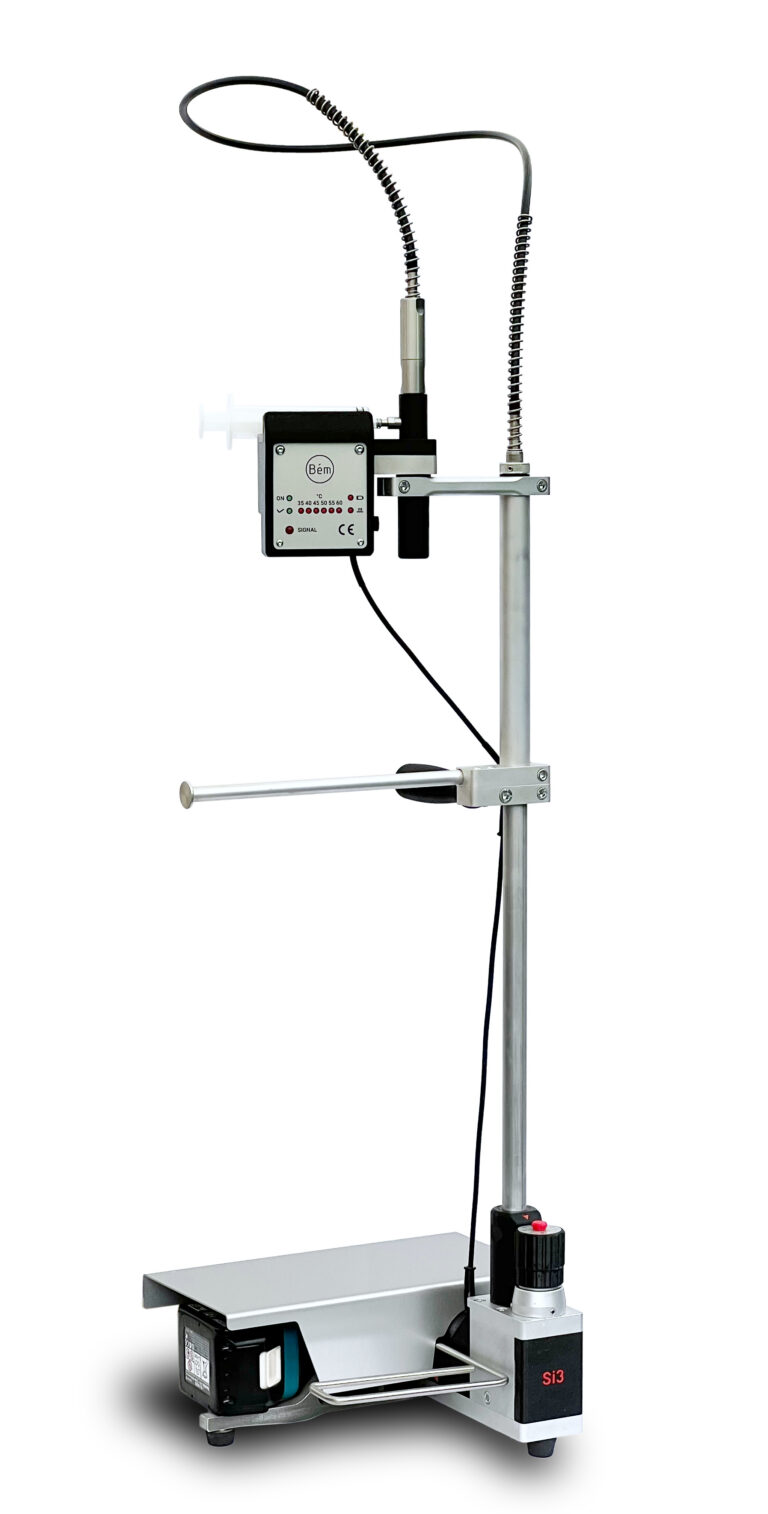
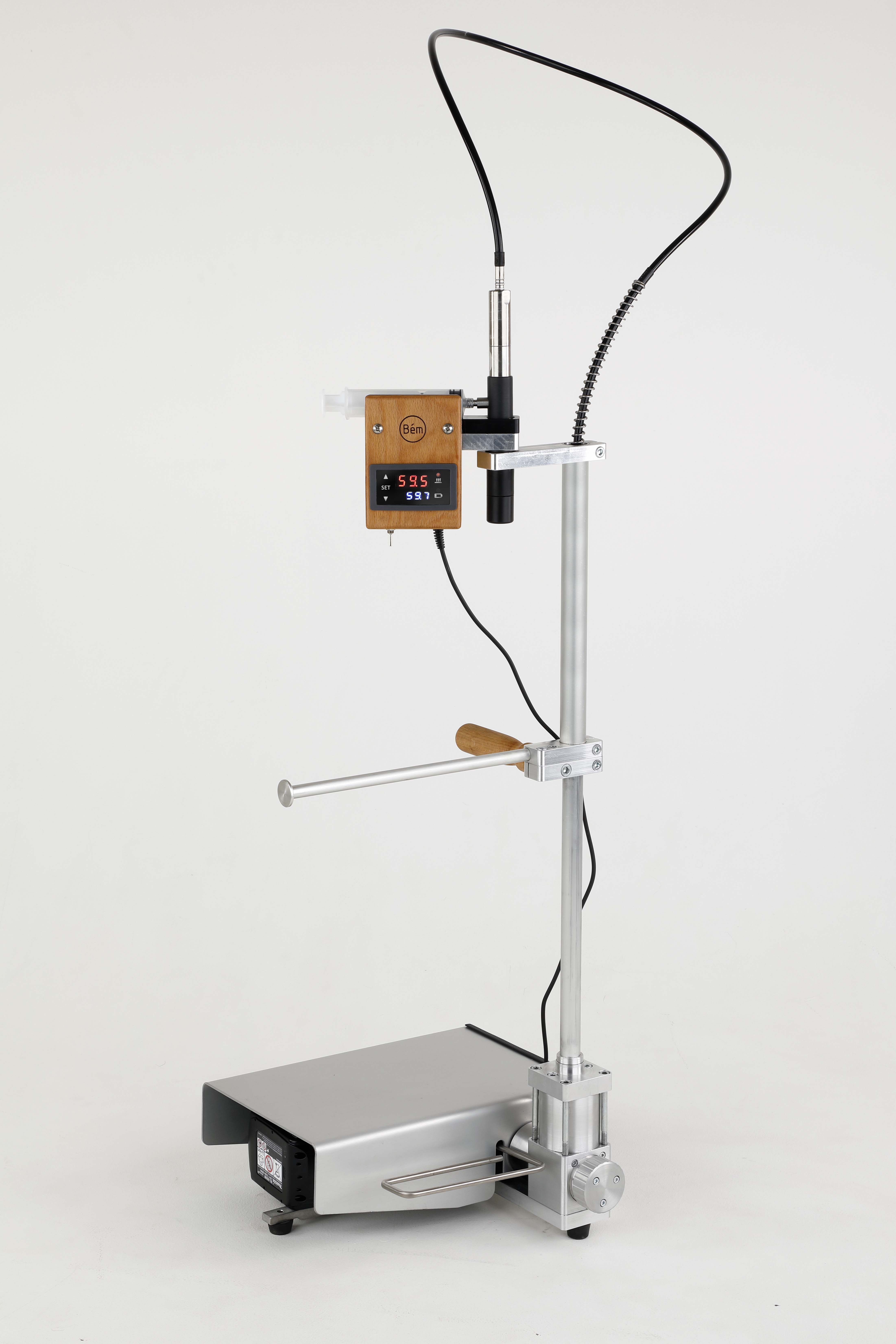
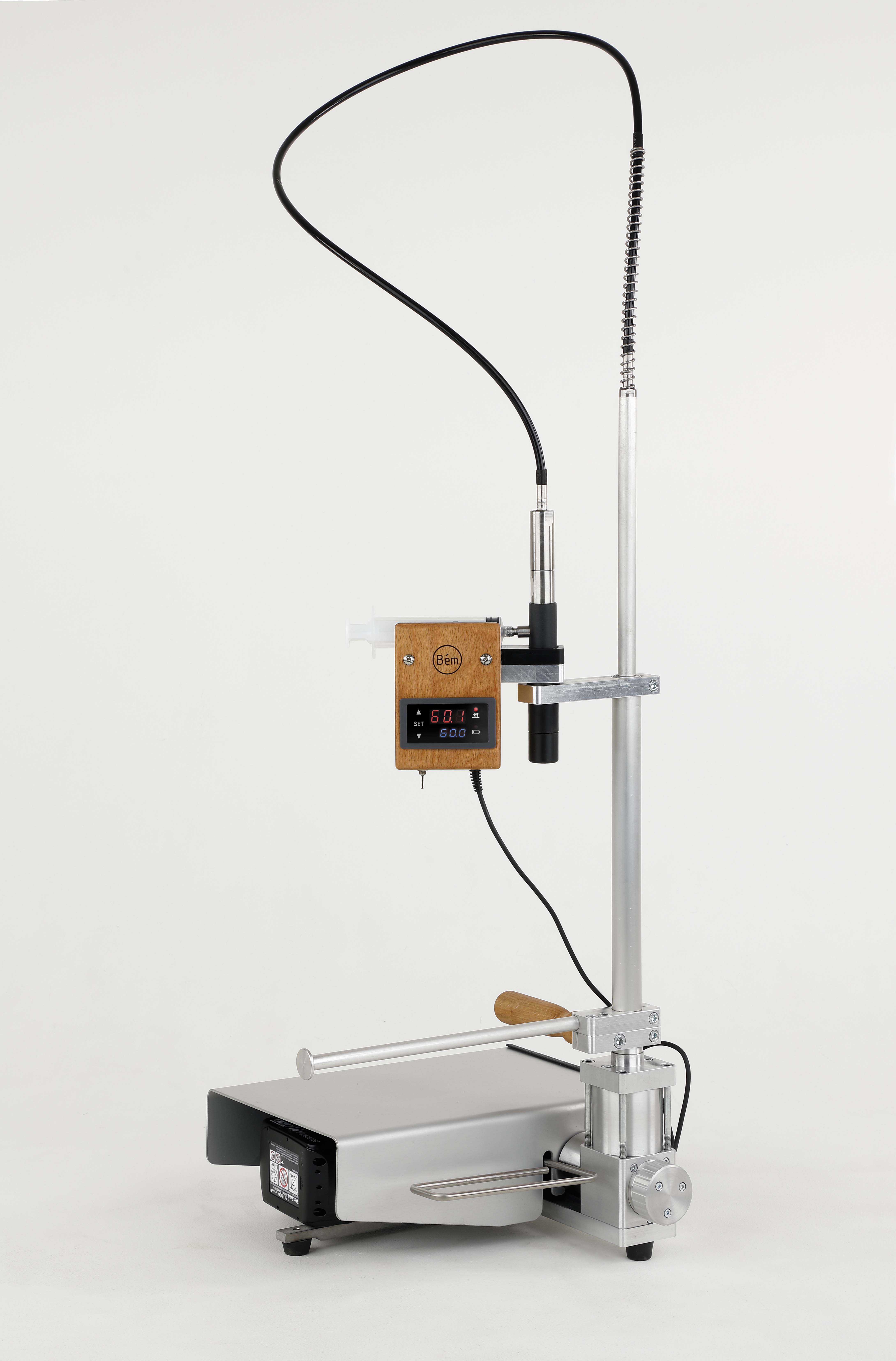
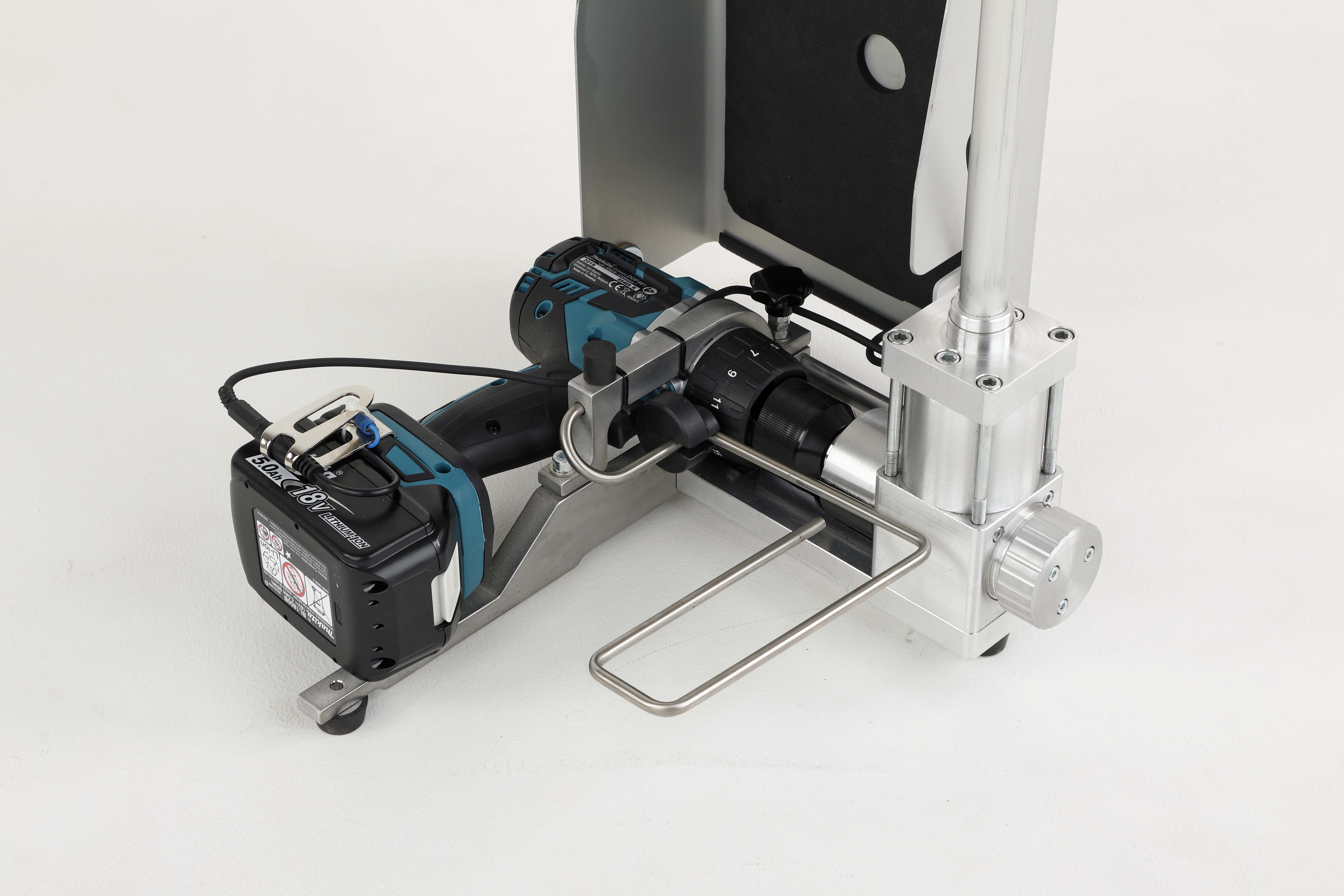
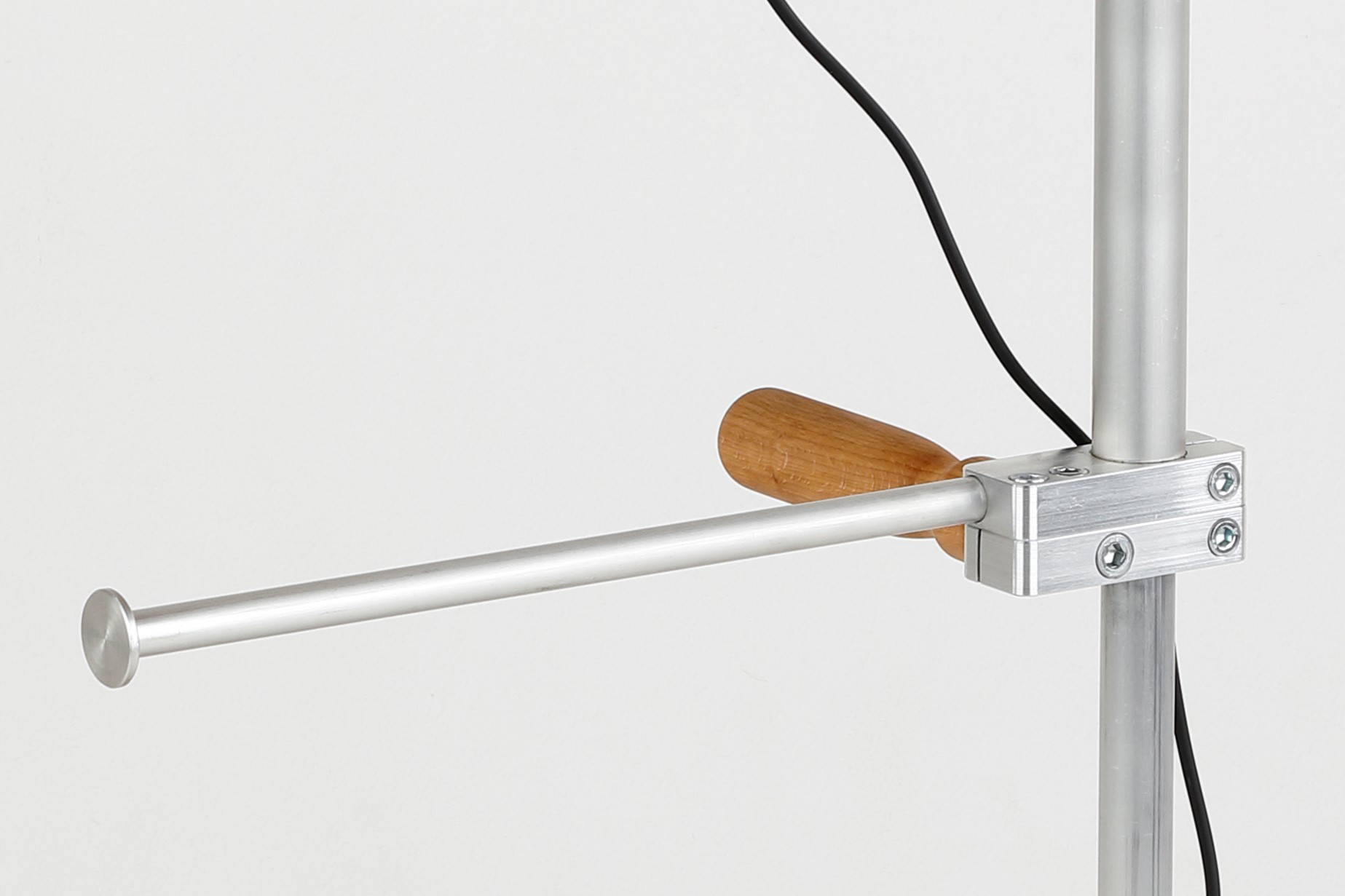
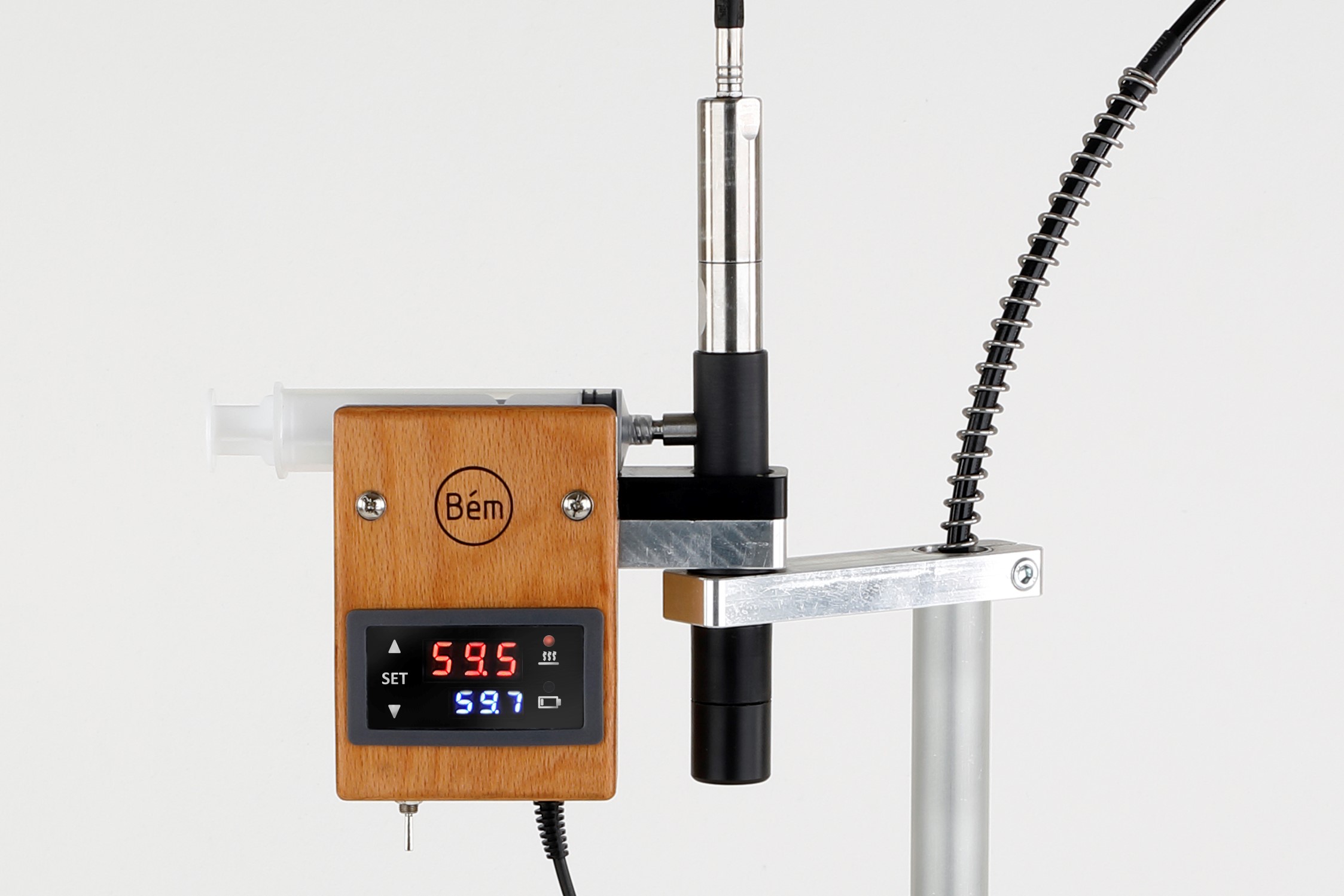
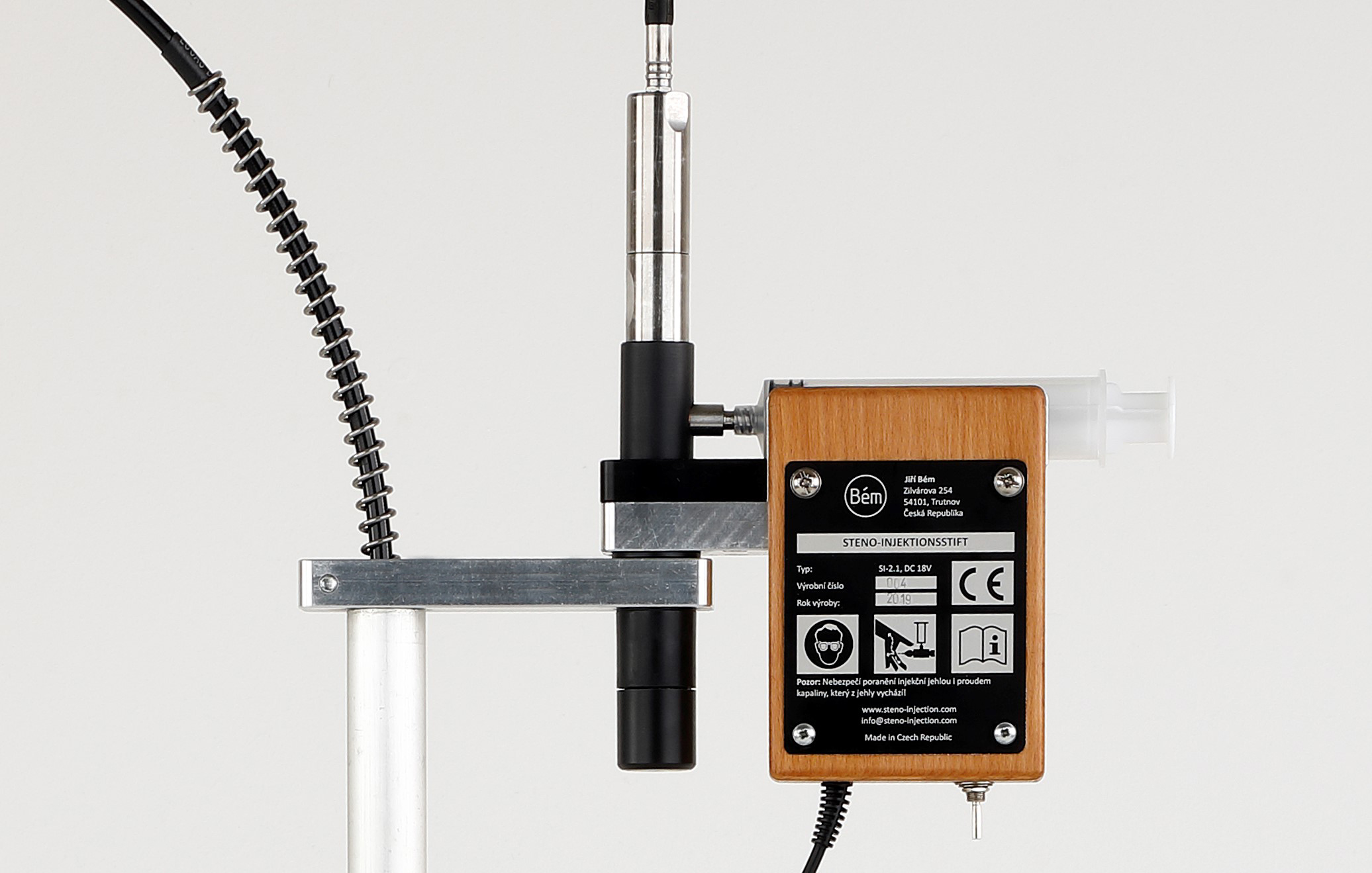
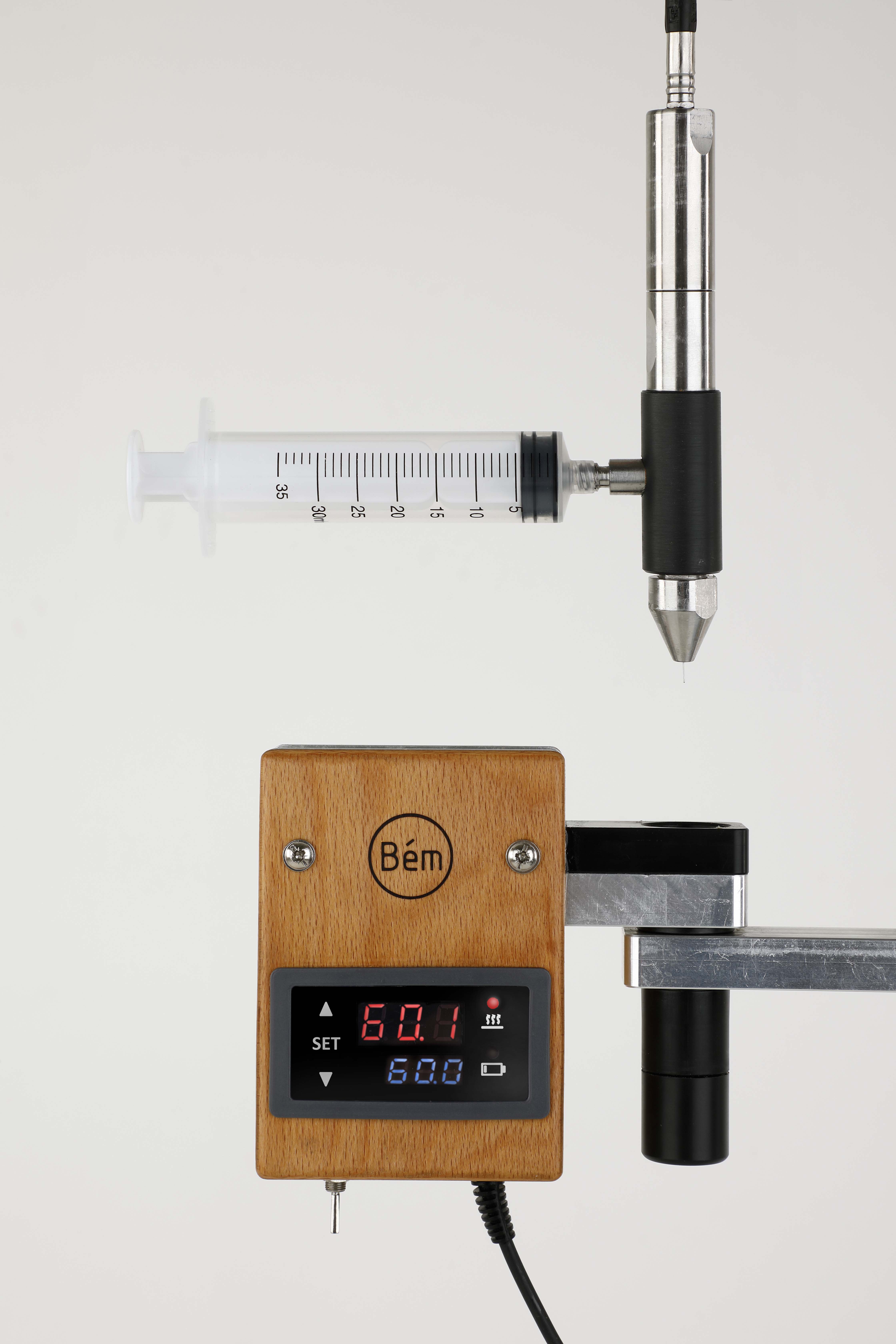
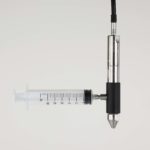
A portable, battery-powered machine was developed for the Steno-injection system. It features a stable base, a telescopic upper support with a carrying handle, and an articulated injection head connected to the unit via a hydraulic hose. The head can deliver the injection material through the cannula at pressures up to 800 bar.
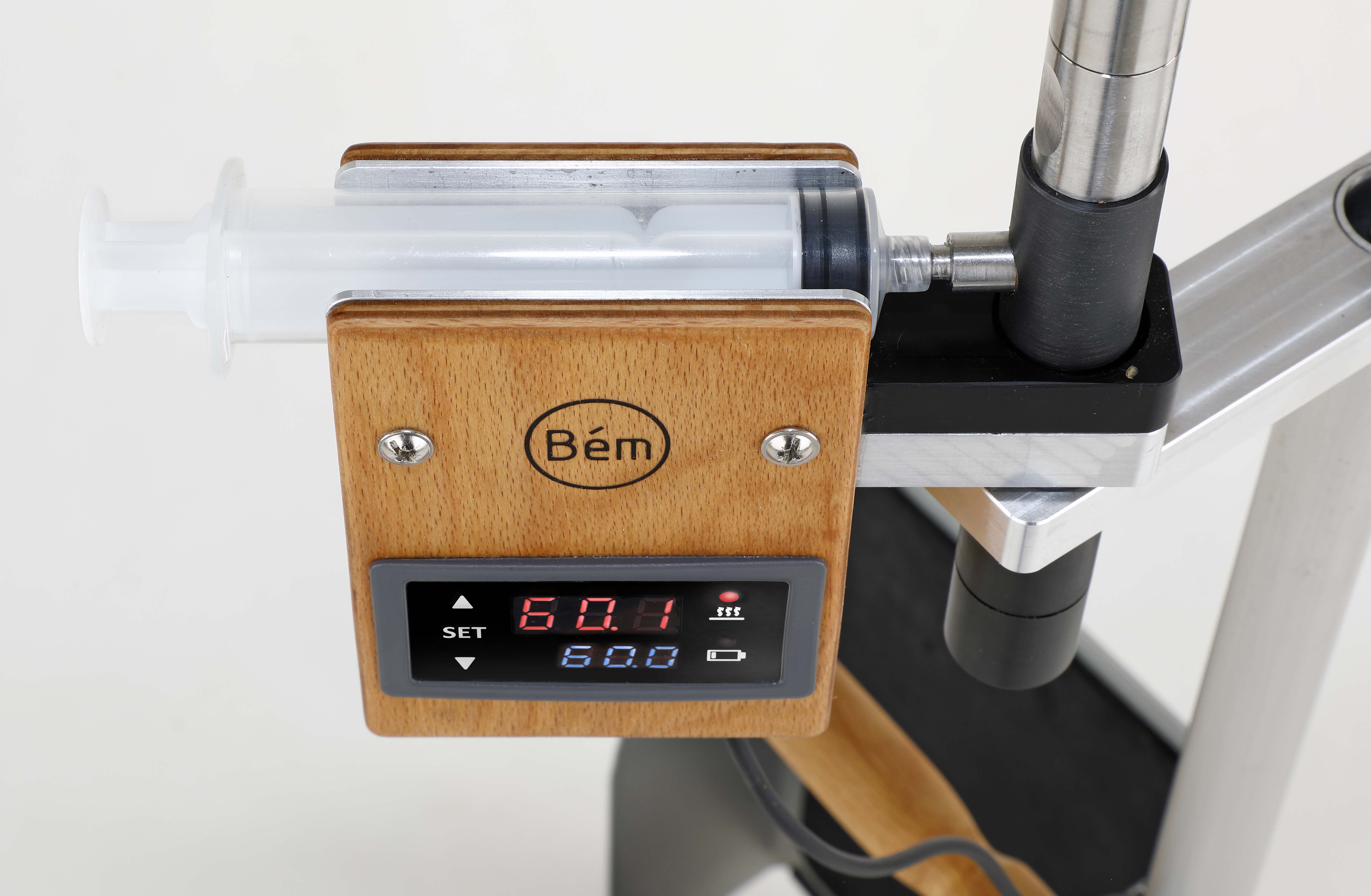
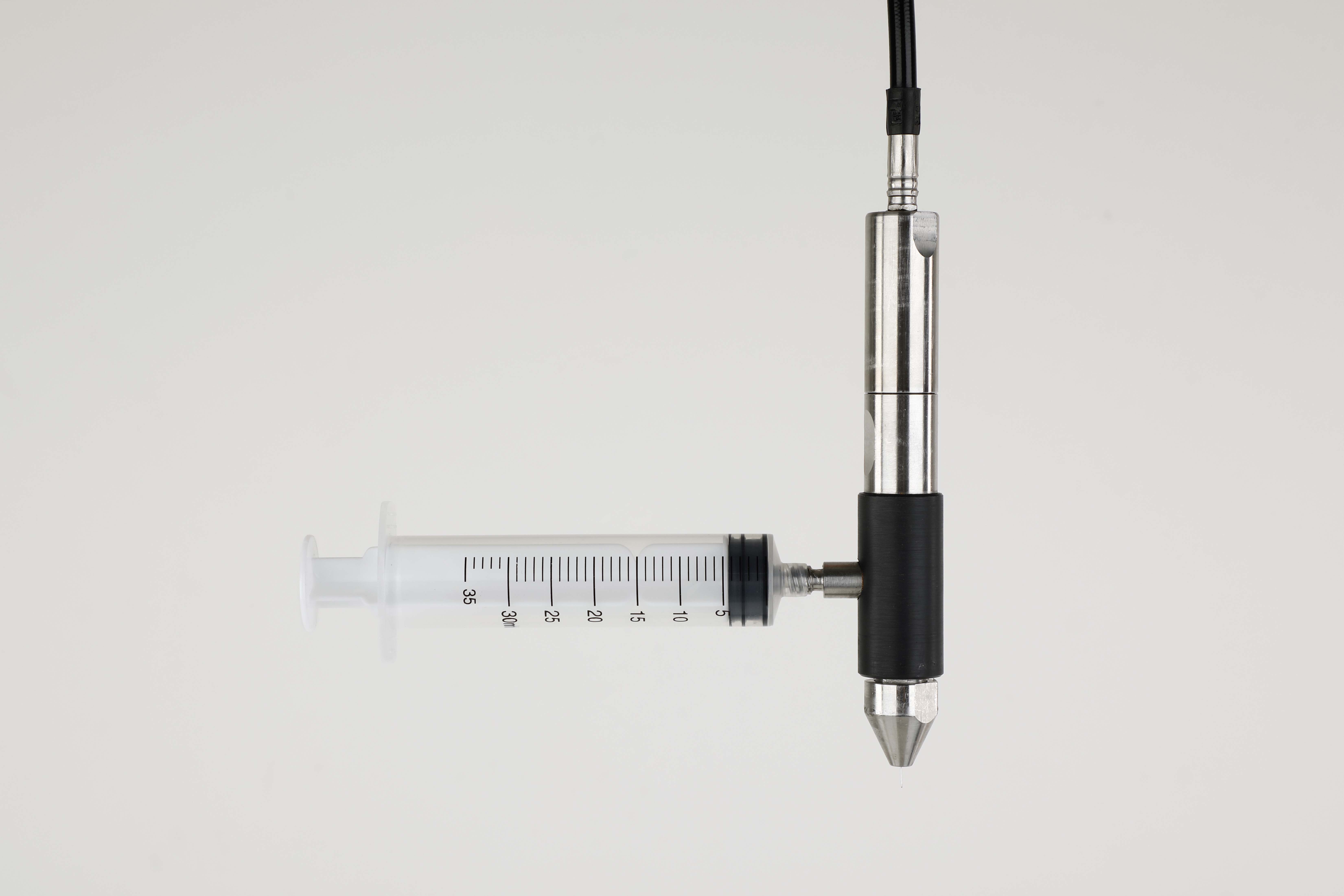
This demanding task is accomplished using just a few stainless steel components, ensuring ease of use and hassle-free cleaning. Mounted on the injection head is a cartridge filled with injection material (e.g., glue), which can be heated via an electric heating element on the stand. This cartridge system guarantees maximum flexibility and cleanliness during operation.
Technical Data (Si2)
Dimensions:
Weight:
Maximum injection pressure:
Injection speed (flow rate):
Drive:
Battery life at a glue temperature of 55°C:
Heating temperature:
Cannula attachment:
150 x 40 x 33 cm
8.2 kg
approx. 800 bar
0 – 0.7 ml/sec
Makita cordless drill driver DDF 481
approx. 2.5 hours
up to 60°C
Ø 0.2 – 1 mm
Structure of the machine
The machine's construction consists of robust metal components that are easy to disassemble. Standard off-the-shelf sealing elements ensure leak tightness.
A powerful Makita cordless drill is used as the drive mechanism. This allows the machine to operate independently of the power grid and take full advantage of a well-developed battery system.
Cannulae
Specialized cannulas are manufactured for the Steno-injection system. These cannulas are categorized by their outer diameter and length.
0.3 mm cannula
Even viscous glutin glues can be injected through these cannulas. Hide glue can be injected at concentrations of up to 40% (w/w). Because these cannulas are prone to bending and clogging, they require delicate handling.
A well-placed 0.3 mm hole is virtually invisible in the wood structure.
0.4 mm cannula
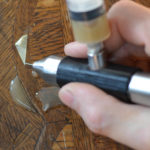
Represents a universal size for furniture restoration. The injection hole remains easy to conceal within the wood grain, while the cannula offers significantly less resistance during injection. High-viscosity glutin glues can also be injected at high speed. An injection pen fitted with a 0.4 mm cannula can serve as a versatile glue dispenser throughout the entire restoration process.
The following describes the possible uses of the cannulas depending on their outer diameter:
0.5 mm cannula
This cannula allows the injection of gap-filling putties. Phenolic resin microspheres have proven to be an effective filler. This size is particularly well-suited for work on historic floors. Smaller holes would be difficult to relocate when working on flooring, significantly slowing down the process. Because injection resistance increases continuously with cannula length, the 0.5 mm cannula is used for deep injection into structural joints.
0.6 mm cannula
This size is used for injections on rustic or less valuable flooring. Working with this cannula saves time due to the better visibility of the holes. It has also proven effective for the deep injection of putty formulations.
0.7 mm cannula & 0.8 mm cannula
The Steno-injection system can handle most restoration tasks using the cannulas mentioned above. Thicker cannulas can be used for exceptionally deep injections—up to 20 cm—and may allow the use of coarser aggregates in the putty mixture.
Cartridges
The machine uses reusable 30 ml cartridges. These are connected to the machine via a Luer-lock connection and can therefore be replaced within seconds.
The cartridge system allows a wide range of glue formulations to be used simultaneously.
Injection hole
In many cases, no injection holes need to be drilled because the joint is accessible through an open seam or crack. If the joint is located beneath a closed surface, drilling is performed using a mini drill fitted with a simple steel wire.
This method allows deep and precise holes to be drilled in wood. Even plastics and resin coatings can easily be drilled through in this manner. This drilling technique renders all glue locations on wooden objects accessible for Steno-injection.
Operation of the machine
Operating the machine requires few specialized skills. However, the injection technique does not usually come naturally, requiring initial practice and instruction. The injection pen must also be disassembled and cleaned from time to time.
For experienced hands, this task takes about 10 minutes. After prolonged periods of disuse (several months) or after an oil change, the machine must be bled. As a result, the machine is less suited for sporadic use.